Leobit
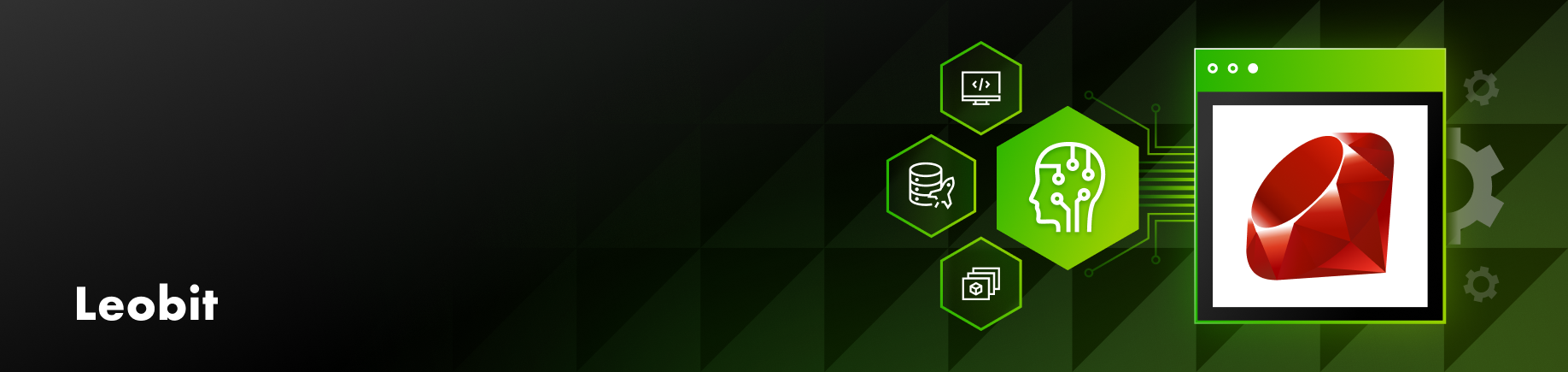

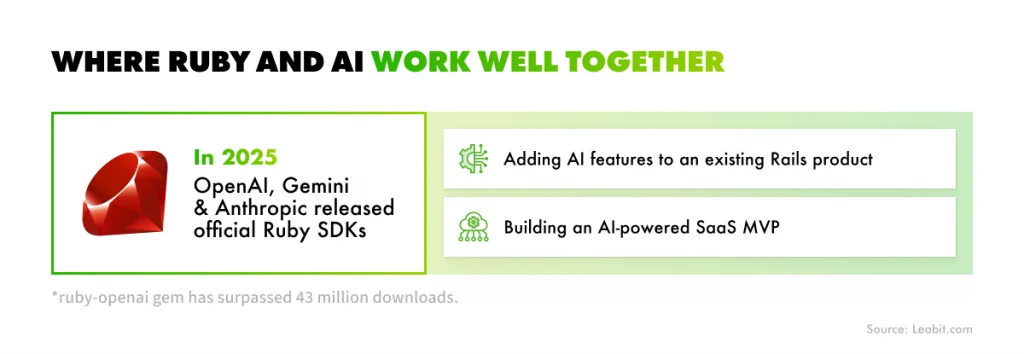
The ruby-openai gem, a client for integrating OpenAI models into Ruby applications, has surpassed 43 million downloads, and in 2025, OpenAI, Gemini, and Anthropic released official Ruby SDKs. These developments show that leading model providers now recognize Ruby as a first-class language for AI integration.
Yet teams building products with Ruby on Rails still hear the same advice: AI requires Python, so a rewrite is inevitable. That assumption can be costly. Rebuilding an application can stall the product roadmap and consume months of engineering time before a single AI feature reaches users, while 88% of organizations already use AI regularly in at least one business function.
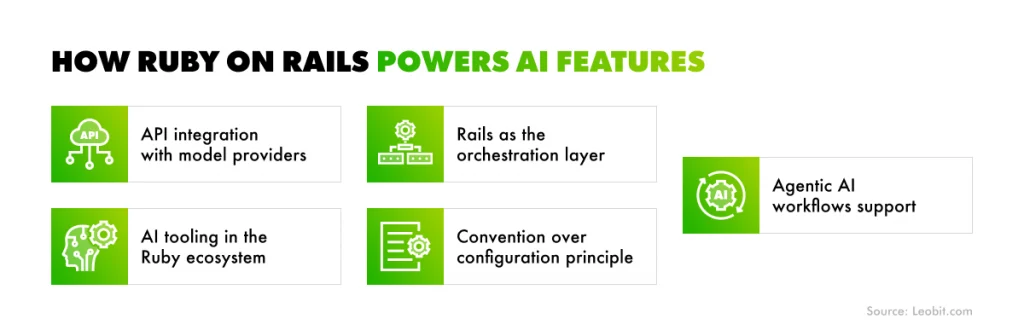
For most products, however, a rewrite is unnecessary. Python remains the leading choice for training machine learning models, but delivering AI-powered features is a different task. Most companies access AI through APIs, making implementation primarily an integration and orchestration challenge that Ruby can effectively handle.
In this article, we explore which AI workloads Ruby supports and where its limitations begin. We also share Leobit’s experience in developing AI-powered software with Ruby and provide a practical checklist to help you choose the right approach for your technology stack.