 Leobit
AI-Native Business Analysis & Requirements Management
Manage product requirements with AI at every stage of your SDLC. Our business analysts draft user stories and wireframes with AI assistance, then review every one before it reaches Jira or Azure DevOps.
12×
faster story creation compared with writing from scratch
~2–3×
more acceptance criteria and edge cases identified
~80%
wireframe completeness before UX review

ISTQB Platinum Partner

Digital App & Innovation

ISO 9001:2015

ISO 27001:2022

Gold Stevie Award 2026

Top 1000 Companies 2025
Top .NET Developer 2026
Top Generative AI Company

Global Business Tech Awards

Apps & Software

Digital & App Innovation
Data & AI

Platinum Partner

Artificial Intelligence
.our understanding
WHAT AI-NATIVE REQUIREMENTS MANAGEMENT
MEANS AT LEOBIT
AI-native requirements management is the business analysis stage of the AI-native SDLC. Business analysts and product owners work within a defined process: named owners for every activity, a backlog hierarchy linked to business goals, a Definition of Ready for every story, and AI skills that create and update stories in Jira or Azure DevOps.
The framework covers four areas:
- People
- Strategy
- Process
- Tooling
Used in our own delivery
Our business analysts and product owners work with the same AI skills for story creation and backlog management. Ownership and decisions stay with the team.
One story standard per project
The skills are configured once per project. After that, the whole BA team applies the same story standard to every story it creates or refines.
.what we offer
AI REQUIREMENTS MANAGEMENT
SERVICES WE PROVIDE
Requirements Maturity Assessment
We review roles, roadmap, backlog, and tooling in your delivery process and prepare recommended next steps for each area.
Requirements Process Setup
We define ownership, communication lines, the roadmap model, the backlog hierarchy, and the Definition of Ready for your teams.
AI-Assisted Story Creation
We configure AI skills to your project standards, terminology, and Definition of Ready. We then connect them to Jira or Azure DevOps.
AI-Assisted Wireframing
We set up skills that turn functional requirements into low-fidelity wireframes in Figma or Visily.
Dedicated BA Team
Our BA team joins your delivery and works within the same requirements process.
Start with an assessment
Roles, roadmap, backlog, and tooling reviewed, with recommended next steps for each area.
.comparison
TIMELINE VS. NOW-NEXT-LATER VS. GOAL-BASED PRODUCT ROADMAPS
We maintain the roadmap structure that fits the organization. The roadmap serves as the living source of truth for planning and stakeholder alignment.
| Timeline-based | Now-next-later | Goal- or theme-based | |
| Anchored in | When | Priority | What and why |
| Structure | Initiatives on a calendar with deadlines, milestones, and expected delivery dates | Work in three buckets: now, next, and later | Initiatives grouped under business goals or themes, layered onto quarters or releases |
| Pros | Visibility into timing and milestones; fits executives and stakeholders focused on timelines | Easy to adapt; keeps the focus on near-term value delivery | Alignment with outcomes and OKRs; communicates the reasons behind priorities |
| Cons | Can create false certainty and is hard to adapt when priorities change; can push teams toward date-driven work | Can feel vague for executives or clients who expect specific timelines | Less detail on exact delivery timing |
| When to use | Large organizations, fixed deadlines, regulatory and compliance work | Startups and teams with fast-changing priorities | Executive and board-level communication, OKR-driven planning |
.reality check
READY FOR REFINEMENT VS. READY FOR DEVELOPMENT
A backlog item passes four statuses before sprint planning. The last two statuses split the Definition of Ready into two stages.
- Open. Created, without acceptance criteria, flows, or structure
- In analysis. The BA or PO writes acceptance criteria, adds wireframes, validates dependencies
- Ready for refinement. About 80% of the Definition of Ready
- Ready for development. 100% of the Definition of Ready

Ready for refinement: about 80%
The team discusses the story and estimates it in story points.
- The user story is written as “As a… I want… so that…”
- Acceptance criteria are defined
- Functional flows, business rules, and key validations are drafted
- Wireframes or flows are attached for UI-related stories
- Dependencies are identified or flagged
- The story fits in one sprint or is already split
- The story is independent and testable

Ready for development: 100%
The team takes the story into sprint planning.
- Everything for ready for refinement, plus:
- The story is groomed with the development team
- Edge cases and negative scenarios are described
- Open questions are resolved
- Design is available
.the economics
HOW BACKLOG DISCIPLINE AFFECTS DELIVERY PREDICTABILITY
The backlog is the source of truth
Why: It holds a shared view of approved work, priorities, and commitments.
How we apply it: Ideas and discovery items stay in a separate space and move into the backlog after validation. Each item carries enough business context for prioritization and refinement.
Too many items create noise
Why: Noise hides priorities and slows down decisions.
How we apply it: Pruning sessions every sprint or every month. Outdated and low-value items are removed, duplicates merged, noise archived.
Structure reduces ambiguity
Why: Well-structured work items speed up delivery.
How we apply it: Epics and features break down into stories, and stories into sub-tasks. Refinement applies INVEST and vertical slicing. The Definition of Ready filters what enters planning.
Priority order removes idle time
Why: Teams know what to work on next.
How we apply it: The most valuable items stay at the top. Grooming keeps about two sprints of refined stories ahead, based on team velocity. Large epics break down gradually.
Standardized requirements
↓
Higher-quality stories
↓
Predictable delivery
↓
Faster product outcomes
.our expertise
BUSINESS ANALYSIS ACROSS THE WHOLE SDLC
The product owner or business analyst takes part in every delivery stage. The table follows our RACI matrix.
| SDLC stage | PO / BA responsibility | AI support |
| Roadmap and prioritization | Maintains the product roadmap and facilitates backlog prioritization with the product manager | None |
| Requirements elicitation | Runs requirements workshops and validates feature concepts with the team and users | The story creation skill takes workshop notes as input |
| Story definition | Breaks features into stories, adds acceptance criteria and functional requirements, brings stories to the Definition of Ready | The story creation skill drafts stories; wireframing skills create low-fidelity wireframes |
| Technical review | Prepares requirements for review; technical leaders review and validate feasibility | None |
| Sprint planning | Runs backlog grooming and prepares sprint scope for approval by the product manager | The backlog management skill updates stories and refines acceptance criteria |
| Development and testing | Answers developer and QA questions on clarifications, acceptance criteria, and blockers | None |
| UAT | Coordinates UAT readiness | None |
| Change management | Triages change requests and plans their implementation | The backlog management skill finds outdated or inconsistent requirements and maintains traceability links |
.roles
WHO OWNS EACH REQUIREMENTS DECISION?
Each activity has one owner, named contributors, and one decision-maker. This keeps delivery aligned, reduces blockers, and keeps decisions moving.

Communication lines
- Product manager → PO/BA. Sets priorities, approves the roadmap, and unblocks strategic decisions.
- PO/BA ↔ technical leaders. Co-own requirements. The BA writes them, and technical leaders (team leads, senior developers, architect) review and validate feasibility.
- PO/BA → developers and QA. Owns the backlog, clarifications, and acceptance criteria. Serves as the first point of contact for blockers.
- Technical leaders → developers. Technical guidance and code reviews.
- Developers ↔ QA. Work together on testing and acceptance until the Definition of Done is met.
.roles
REQUIREMENTS RACI MATRIX
- A = approves and owns
- R/A = does and owns
- R = executes
- C = consulted I = informed
| Activity | Product manager | PO / BA | Tech leaders | Dev team | QA |
| Maintain the product roadmap | A | R | C | I | I |
| Run requirements workshops with the team and users | C | R/A | C | C | I |
| Validate feature concepts with the team and users | C | R/A | C | I | I |
| Facilitate backlog prioritization | A | R | C | I | C |
| Maintain the product backlog and priority order | A | R/A | C | I | I |
| Break down features into stories | I | R/A | C | I | C |
| Add acceptance criteria and functional requirements | I | R/A | C | I | C |
| Bring stories to the Definition of Ready | I | R/A | I | C | C |
| Conduct the technical review of requirements | I | R | R/A | C | C |
| Conduct backlog grooming with the team | C | R/A | C | C | C |
| Finalize sprint backlog scope and priority | A | R | C | C | C |
| Serve as the first point of contact for developers and QA | I | R/A | C | I | I |
| Coordinate UAT readiness | A | R/A | I | I | C |
| Triage change requests and plan implementation | A | R/A | C | I | I |
.adoption
HOW WE ADOPT AI-NATIVE REQUIREMENTS MANAGEMENT Cloud services
We provide

PEOPLE
- Define ownership across product, BA, engineering, and QA
- Formalize communication and decision-making
OUTPUT
Communication lines and governance

STRATEGY
- Adopt a goal- or outcome-based roadmap
- Align all teams to shared milestones and priorities
OUTPUT
A goal → initiative → story hierarchy

PROCESS
- Roll out the Definition of Ready checklist
- Improve backlog readiness and sprint predictability
OUTPUT
A standardized backlog readiness process

TOOLING
- Deploy the story creation and wireframing skills
- Integrate Azure DevOps, Jira, or other project tools for automation
OUTPUT
AI-assisted product delivery across teams
.the operating system
THE AI SKILLS BEHIND AI-NATIVE REQUIREMENTS MANAGEMENT
AI skills support our business analysts and product owners in story creation and backlog management. They work inside a Claude project space and connect to Jira directly, while using an MCP server to connect to Azure DevOps.
Models: built as Claude skills; also run on OpenAI GPT models, Google Gemini, and Azure OpenAI Service
STORY CREATION ASSISTANT
Goal: create backlog items faster.
- Requirement decomposition
- Story generation for epics and features
- Acceptance criteria drafting
- Story splitting with INVEST and vertical slicing
- Metadata assignment
- Story quality checks
BACKLOG MANAGEMENT ASSISTANT
Goal: keep backlog items accurate and synchronized.
- Create stories in Jira or Azure DevOps
- Update existing stories
- Refine acceptance criteria
- Manage stories through natural language instructions
- Identify outdated or inconsistent requirements
- Maintain traceability and links
HOW A USER STORY IS CREATED
- Input: A feature idea, workshop notes, or a business need.
- Generate: The skill knows the project context, naming conventions, formatting rules, and templates. It applies project standards, terminology, and the Definition of Ready and generates the full story structure: acceptance criteria, functional details, assumptions, field requirements, and open questions.
- Review and validate: The analyst checks quality and completeness and iterates until the story is complete.
- Create: The story is created in Jira or Azure DevOps with the title, description, acceptance criteria, story type, labels, metadata, and links.
Configured once per project, so the whole BA team applies the same story standard.
10–20×
faster than writing stories from scratch
~2–3×
more acceptance criteria and edge cases identified
1
prompt to a Jira-ready story
.the operating system
AI WIREFRAMING: DESIGN-SYSTEM DRIVEN VS. DISCOVERY-DRIVEN
Design-system driven
For: Teams with an existing design system
What the skill does: Generates a structured wireframe specification: applies design-system rules, defines screens and components
Where wireframes are built: Figma, with existing design system components
Analyst’s steps: Enters requirements or a story reference, runs the Figma wireframe skill, reviews and adjusts the wireframes, shares them for refinement and stakeholder review
Works best with: A design system and a reusable component library
Discovery-driven
For: Rapid discovery and MVP ideation
What the skill does: Generates a wireframe prompt: defines screens, user flows, and states
Where wireframes are built: Visily, as several low-fidelity concepts
Analyst’s steps: Enters requirements or a story reference, runs the wireframe prompt skill, pastes the prompt into the Visily AI assistant, reviews the concepts and selects a direction
Works best with: Several concepts explored before committing to a design direction
10–20×
faster than hours of work from scratch
~80%
completeness before UX review
1 session
to a shareable wireframe
.the operating system
WHAT EVERY USER STORY CONTAINS
Five parts:
- User story
- Acceptance criteria
- Functional requirements
- Field validation rules
- API and database requirements
Five groups of attributes, captured through custom fields, links, tags, or story sections in Azure DevOps or Jira
| Group | Attributes |
| Functional context | Product area or module; navigation path to the functionality (for example, Customer Portal → Account → Reports); existing or new component |
| Design references | Figma deep link to the screen; supporting wireframes, mocks, or sketches; API or technical specifications |
| Dependencies and constraints | Related stories, technical dependencies, known blockers or prerequisites |
| Story boundaries | Out-of-scope items, key assumptions, known limitations or exclusions |
| Delivery planning | Target release or version, priority, target sprint, target milestone |
.the operating system
Backlog Hierarchy and Requirements Traceability
Parent-child relationships and issue links keep requirements traceability in place.
Backlog levels
- Initiative or idea (strategic level): “Improve self-service reporting”
- Feature (feature level): “Usage report dashboard”
- User story (function level): “As an account manager, I want to filter usage by date range…”
- Task (execution level): “Implement the date range filter component”
Linking rules
- User story → feature: must be linked
- Technical story → feature: must be linked
- User story → tasks: must have tasks
- Technical story → tasks: may have tasks
- Bug → story: must be linked if related to a story
- Improvement or change request → story: may be linked
.case studies
BUSINESS ANALYSIS CASE STUDIES
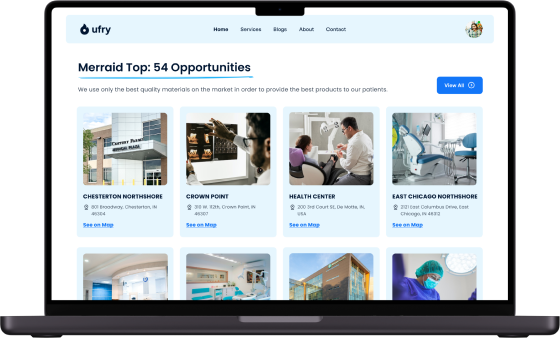
HealthTech Externship Coordination Platform
Custom web development for a US healthcare EdTech company, with the discovery phase and delivery through the beta release.

Real Estate Bidding Platform
Software discovery phase and architecture planning for a US PropTech company.
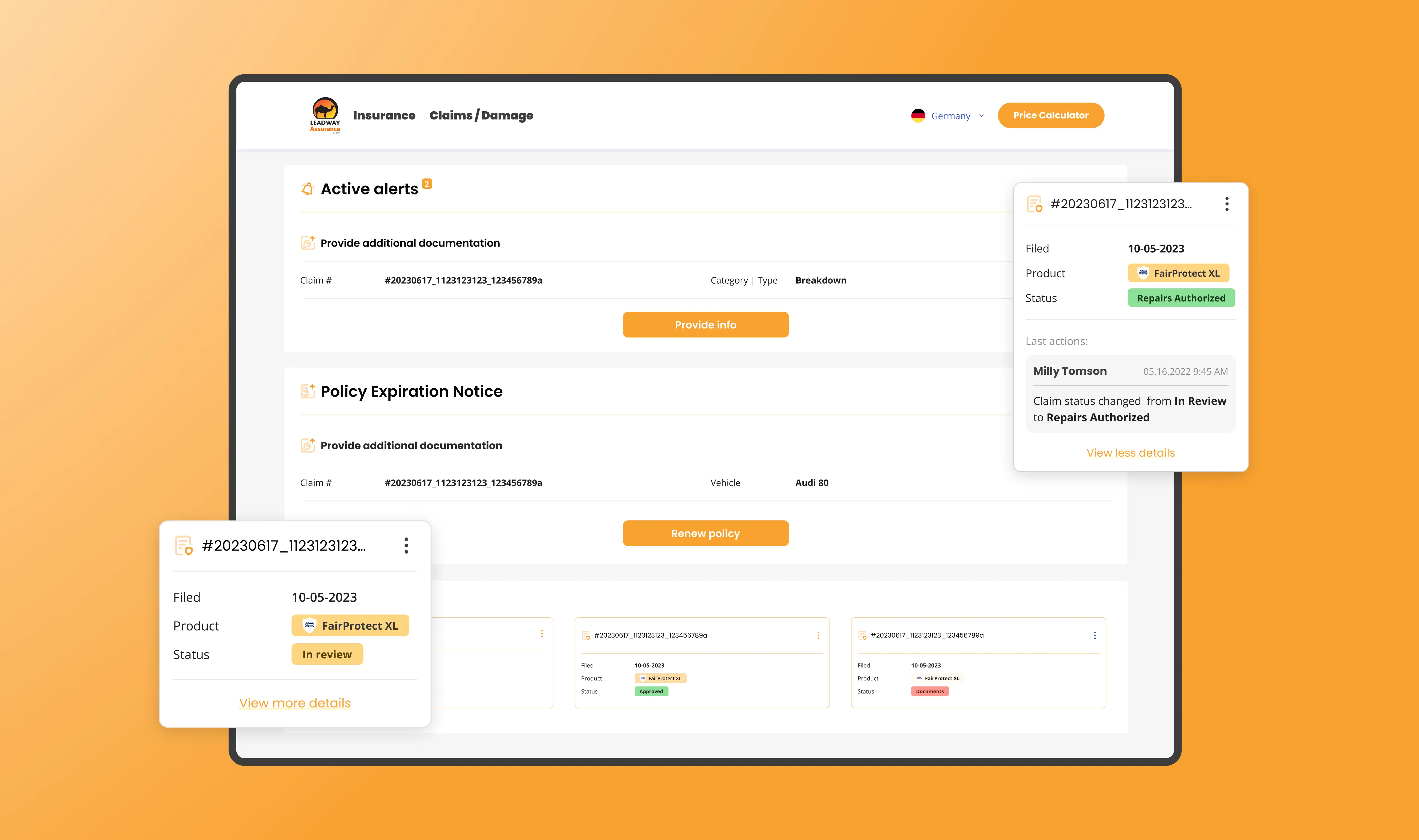
AI-supported Car Warranty Insurance Platform
Custom software development for a German InsurTech company, with the discovery phase and delivery through the MVP release. The MVP includes AI/ML scripts that calculate risks and insurance prices.
.our leaders
OUR BUSINESS ANALYSIS AND DELIVERY LEADERS

Iuliia Berezenko
BAO Director

Zoriana Horbach
Senior Business Analyst

Halyna Bezruchko
Senior Business Analyst

Nadiia Dopira
Senior Business Analyst
.why us
WHY CHOOSE LEOBIT
- Business Analysis Office with a requirements framework built on people, strategy, process, and tooling
- 50+ business analysis projects delivered
- Product owners, business analysts, and requirements managers in four team setups
- Microsoft Solutions Partner for Digital & App Innovation and Data & AI
- ISO 9001:2015 and ISO 27001:2022 certified
REQUIREMENTS MANAGEMENT FAQ
Requirements management covers the roles, roadmap, backlog rules, and tools that take product requirements into development. At Leobit, it rests on four pillars: people, strategy, process, and tooling.
The Definition of Ready applies before a sprint: only stories that meet it enter sprint planning. The Definition of Done applies after the development stage: QA tests against these criteria and signs off.
Our story creation skill generates the full story structure: acceptance criteria, functional details, assumptions, field requirements, and open questions. It works from project context, terminology, and the Definition of Ready. An analyst validates each story before it is created in Jira or Azure DevOps.
Yes. The RACI matrix assumes a VP-level product manager, and approvals are adjusted to your organizational structure.
