 Leobit
AI-Native Software Development Lifecycle
AI is embedded across the entire software development lifecycle as a governed engineering system, with experienced engineers staying in control. Across real client projects, this approach delivers 3–10× faster time to accepted output than traditional or ad hoc AI-assisted development.
25+
AI projects delivered
~20
internal AI agents in production
35+
Anthropic, Azure & AWS AI-certified engineers
Top Artificial Intelligence Award Winner

Data & AI

ISO 9001:2015

ISO 27001:2022

Gold Stevie Award 2026

Top 1000 Companies 2025
Top .NET Developer 2026
Top Generative AI Company

Global Business Tech Awards

Apps & Software

Digital & App Innovation
Data & AI

Platinum Partner

Artificial Intelligence
What AI-Native SDLC
Means at Leobit
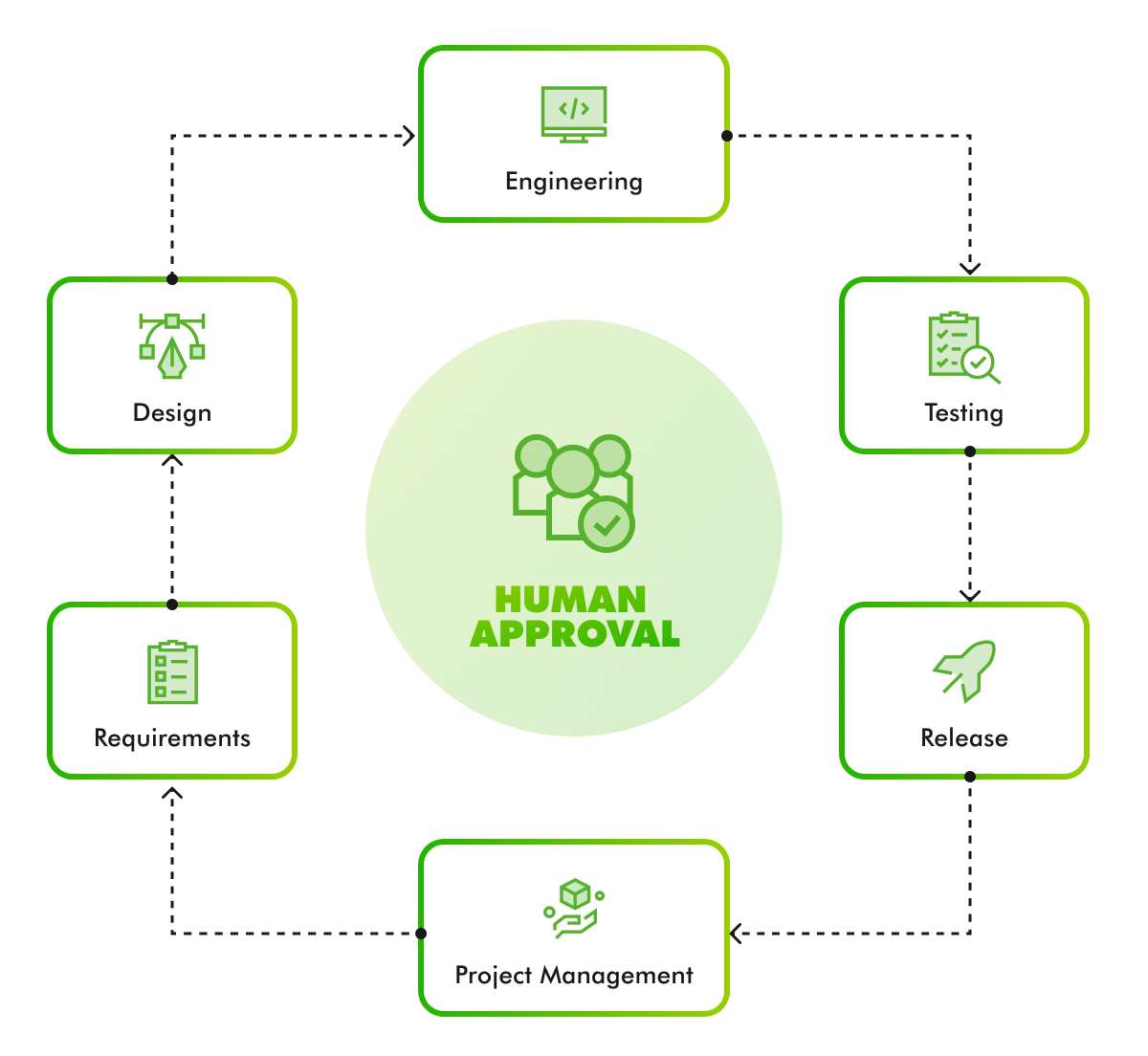
An AI-native software development lifecycle is a delivery model in which AI supports work across requirements, design, engineering, testing, release, and project management. Shared context, defined workflows, human oversight, access controls, and delivery metrics keep the process reliable and repeatable.
Measured improvements. Across our internal delivery metrics, teams complete accepted work 3–10× faster than traditional software delivery, depending on the stage: business analysis, engineering, testing, or project management.
We use the same delivery model internally. AI-native delivery is how Leobit operates every day. Our teams work with a corporate LLM, internal AI agents, and the same governed workflows that we apply to client projects.
Same system powers client projects. Every engagement follows the same workflows, review gates, governance, and delivery metrics that we use internally.
AI Services
We provide

AI R&D and Proof of Concept
Validate AI ideas quickly with production-focused proofs of concept before committing to full-scale development.

AI technology assessment
Assess AI opportunities, define the architecture, and build a practical roadmap for adoption.

AI engineering
Design, build, and integrate AI, ML, and generative AI solutions into your software solution.

Dedicated AI Engineering Team
Extend your engineering capacity with dedicated AI teams operating within Leobit’s AI-native SDLC

AI-native solution development
Deploy Leobit’s governed AI engineering system into your delivery organization, with shared workflows, governance, and reusable knowledge.
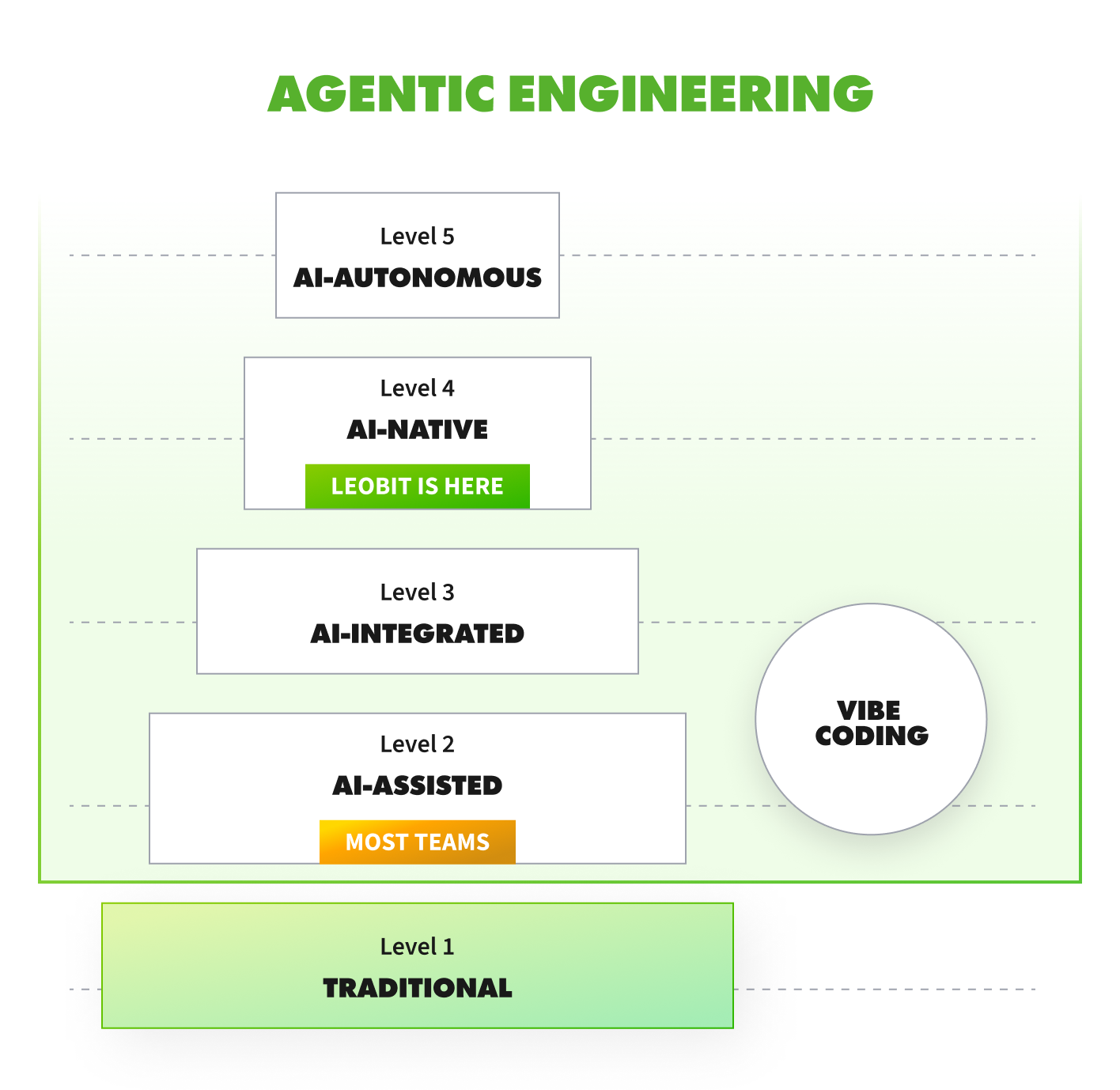
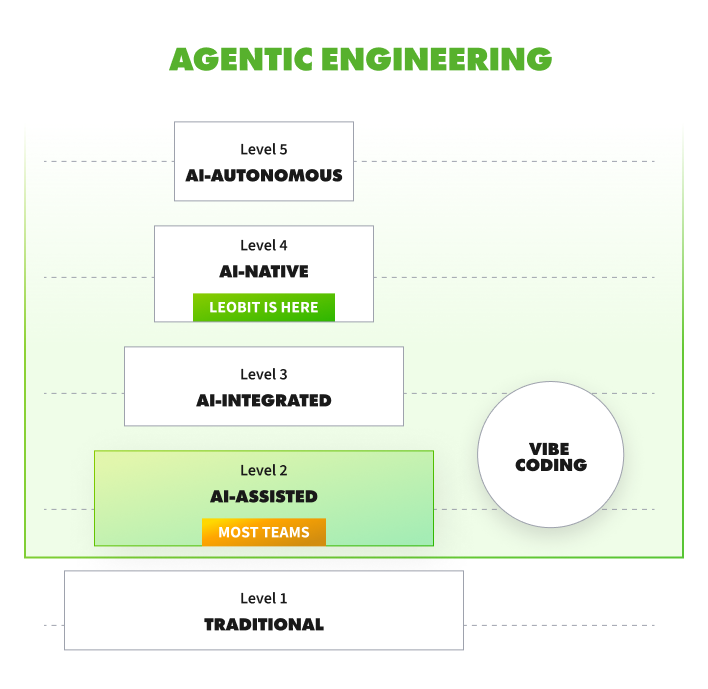
The Five Levels of AI-Native SDLC Maturity
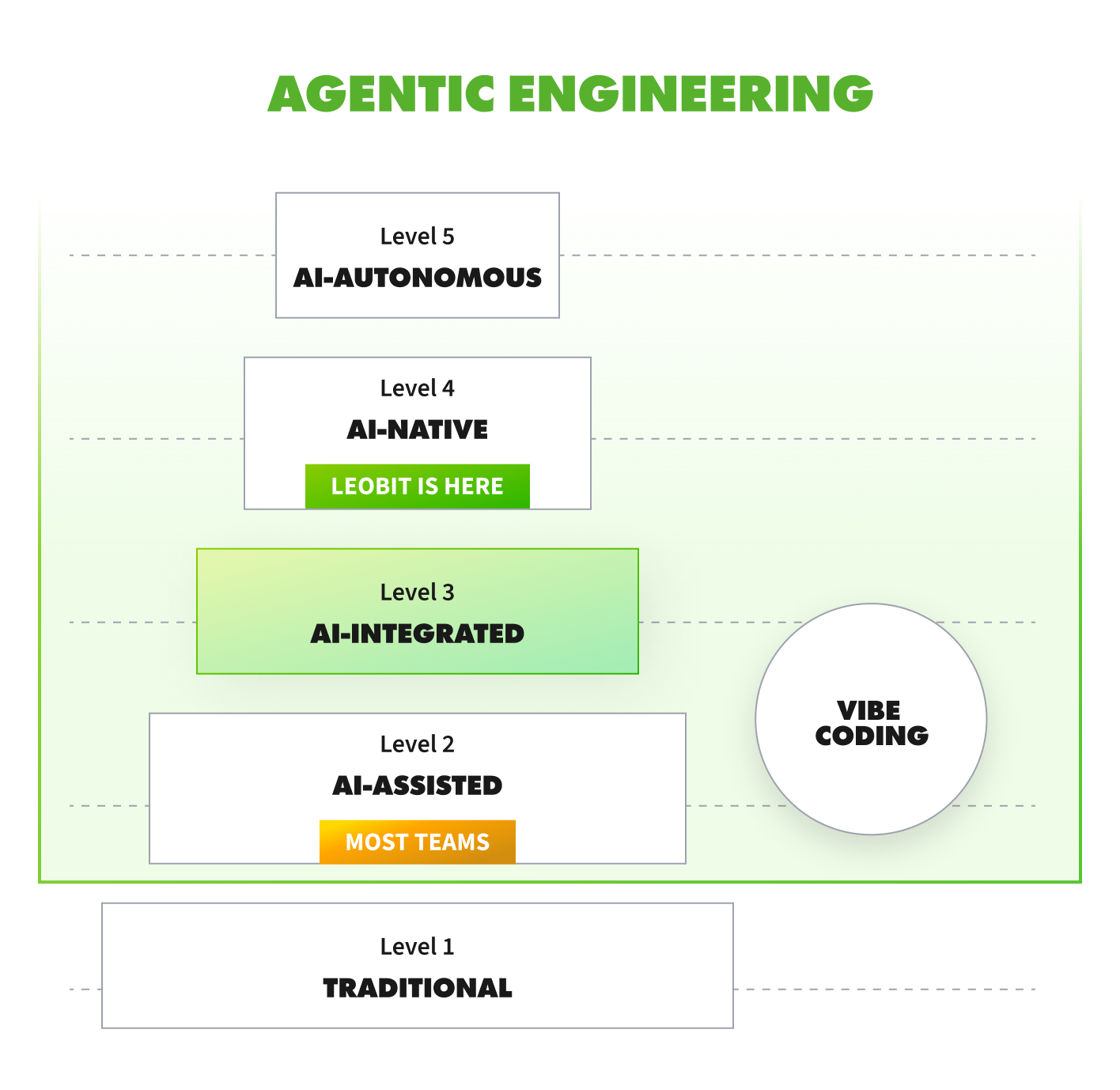
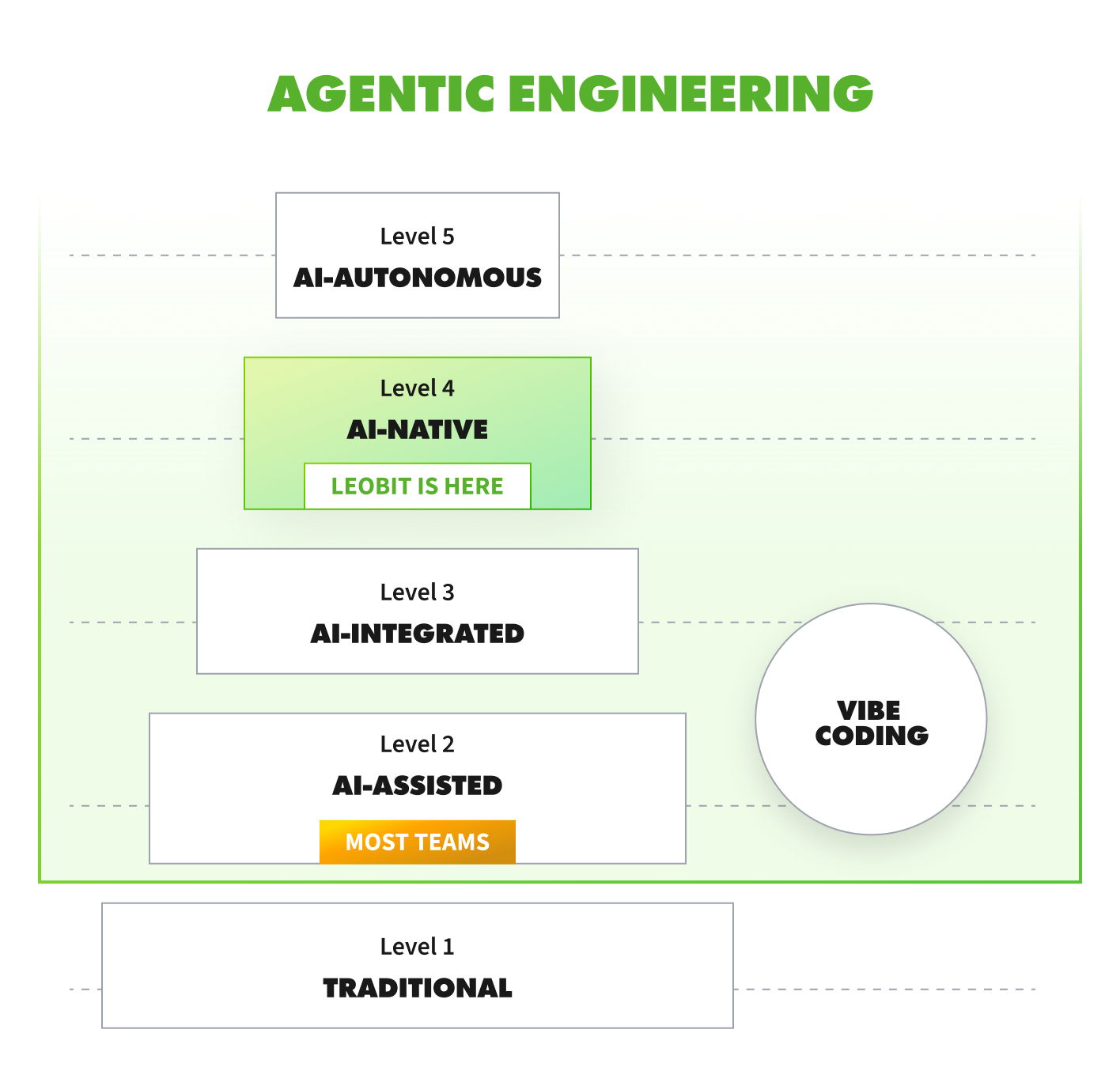
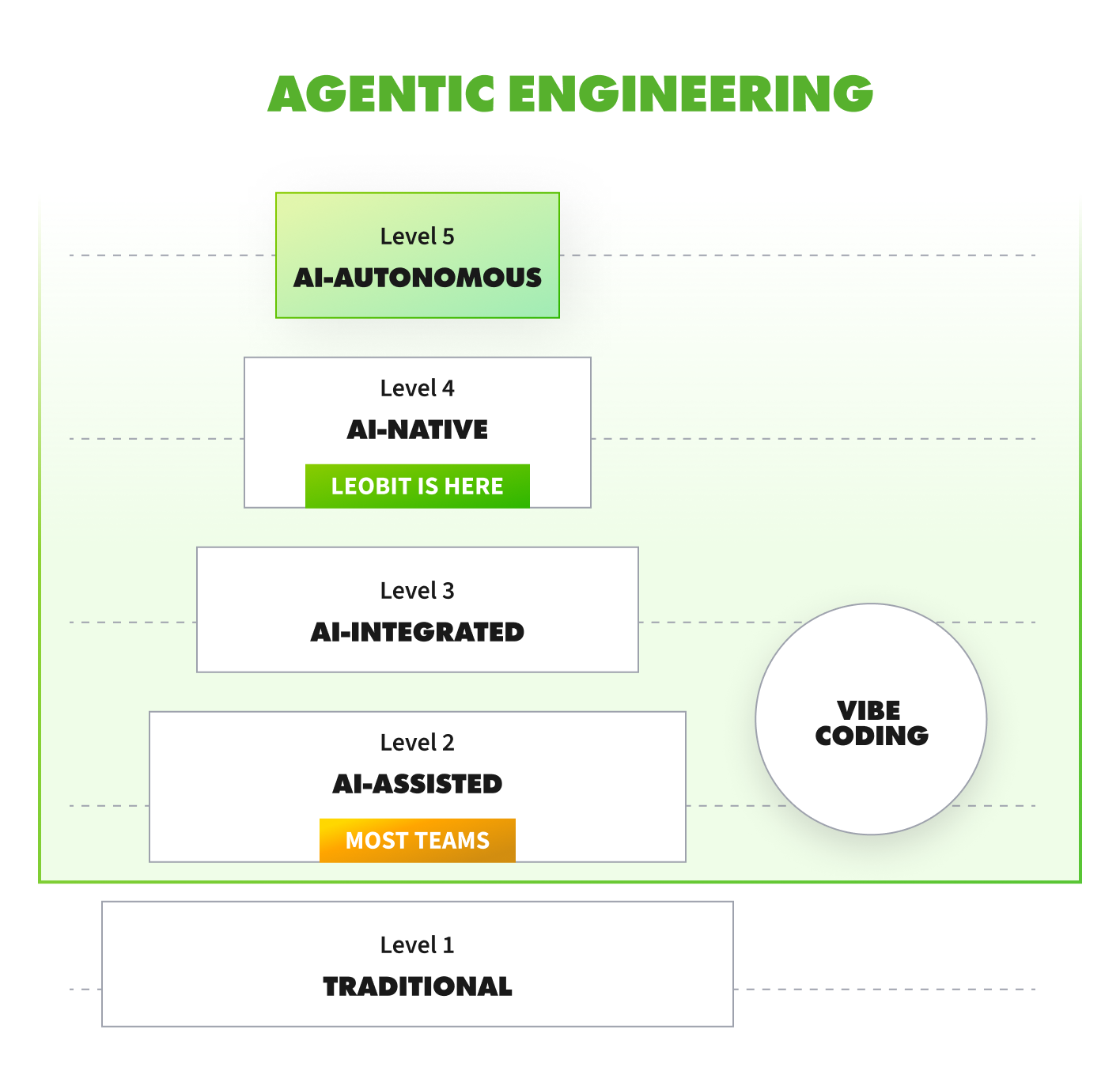
AI-Assisted vs AI-Native SDLC
AI-Assisted SDLC
-
INTENT. Requirements live in individual prompts and chat sessions. Project context is fragmented and difficult to reuse.
-
VERIFICATION. AI-generated output is reviewed manually, without defined acceptance criteria.
-
ERROR HANDLING. Errors are fixed through additional prompting and manual iteration, without a defined recovery process.
-
KNOWLEDGE. Useful prompts and solutions stay in individual chat sessions and are not retained by the team.
-
PRODUCTION SCOPE. Prototypes, scripts, experiments, and isolated tasks.
AI-Native SDLC
-
INTENT. Requirements are captured in version-controlled specifications, architecture documents, and memory files, creating shared context for the entire team.
-
VERIFICATION. Every change passes automated tests, AI evaluations, code reviews and CI/CD gates.
-
ERROR HANDLING. Agents operate within guardrails while engineers retain architectural control.
-
KNOWLEDGE. Solutions become reviewed organizational knowledge that the whole team can reuse.
-
PRODUCTION SCOPE. Production software governed by engineering standards.
.reality check
Vibe Coding vs Agentic Engineering

VIBE CODING
A conversational approach to software development where developers guide AI through prompts, iterating until the solution meets the immediate goal.
Where it fits: Rapid prototyping, technical spikes, internal tooling.
What it lacks for production: Shared project context, systematic verification, versioned design decisions, and production governance.

AGENTIC ENGINEERING
A conversational approach to software development where developers guide AI through prompts, iterating until the solution meets the immediate goal.
Where it fits: Production software that must be maintained, governed, and evolved by engineering teams.
What it requires: Shared engineering context, version-controlled specifications, automated quality gates, and clearly defined human oversight.
.the economics
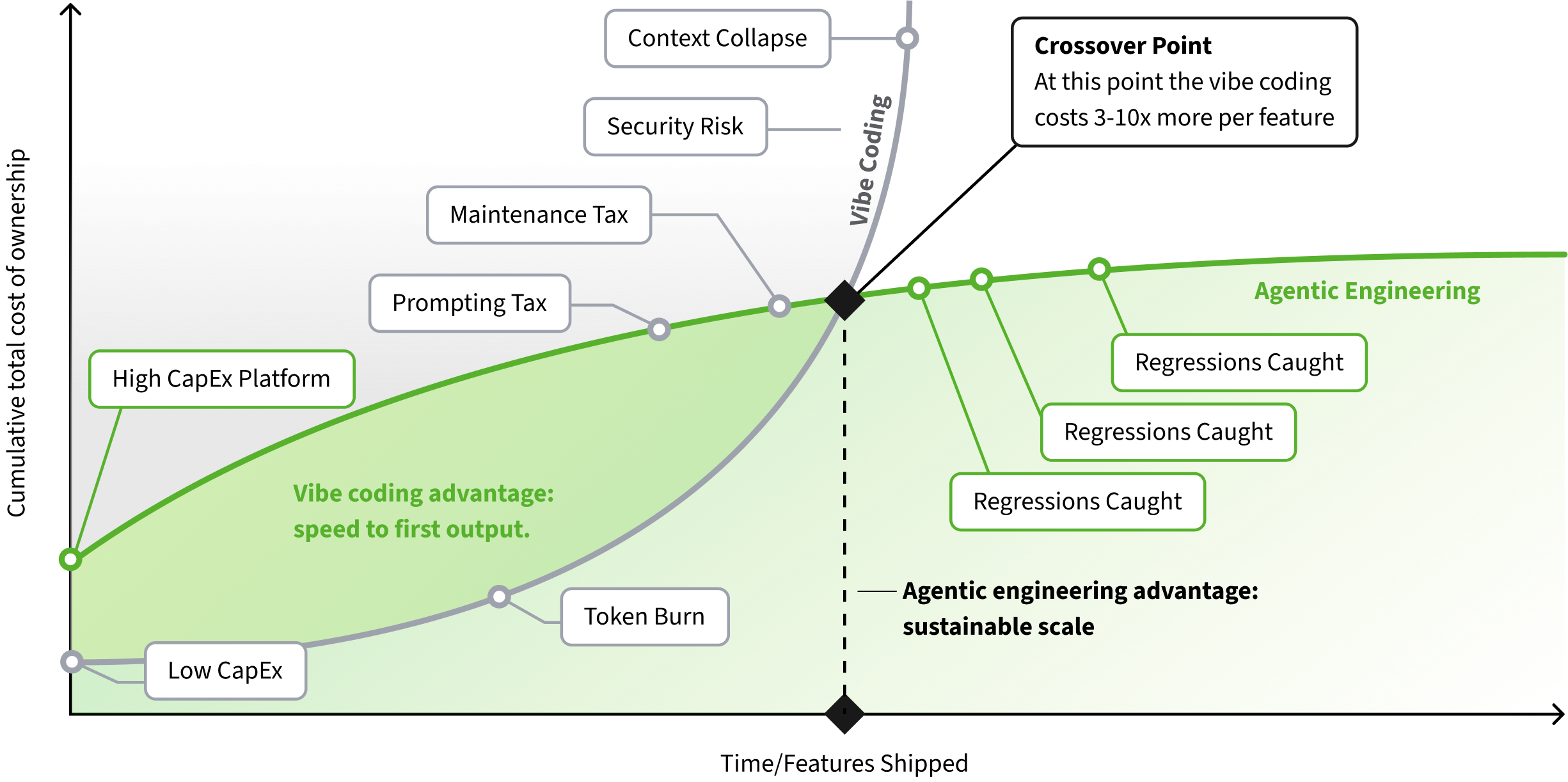
The Cost of Ownership:
Ad-Hoc AI vs AI-Native SDLC
Ad-hoc AI use has a low entry cost and a rising cost of ownership: rework, maintenance, and security debt accumulate with every release. AI-native SDLC shifts more investment to the beginning of the project, reducing the cost of every feature that follows.
AI-ASSISTED
- Low first-pass acceptance: more AI output requires review, correction, and repeated generation
- Knowledge doesn’t accumulate: solutions stay inside chats instead of becoming reusable engineering assets.
- Technical debt: Inconsistent patterns, security gaps, and duplicated solutions increase over time.
AI-NATIVE SDLC
- Shared engineering system: specifications, architecture, tests, and AI agents work from the same project context.
- First-pass acceptance: structured context and automated verification reduce rework before review.
- Compounding engineering knowledge: every accepted solution becomes reusable context for future work.
.our expertise
One Governed AI System Across the Whole SDLC
ONE SYSTEM ACROSS YOUR SDLC
Requirements, code, testing, documentation, and status updates run through the same governed AI system.
COMPLETE PROJECT CONTEXT
Code repositories, specifications, architecture decisions, and documentation form one shared project context.
KNOWLEDGE THAT COMPOUNDS
Every accepted solution becomes reusable engineering knowledge. The system improves with every sprint and retains expertise even as teams grow or change.
.measured
Measured Productivity Gains of an AI-Native SDLC
The table shows measured improvements in time to accepted output across engineering disciplines. Results compare traditional delivery, AI-assisted delivery, and our AI-native SDLC using the same models and acceptance criteria.
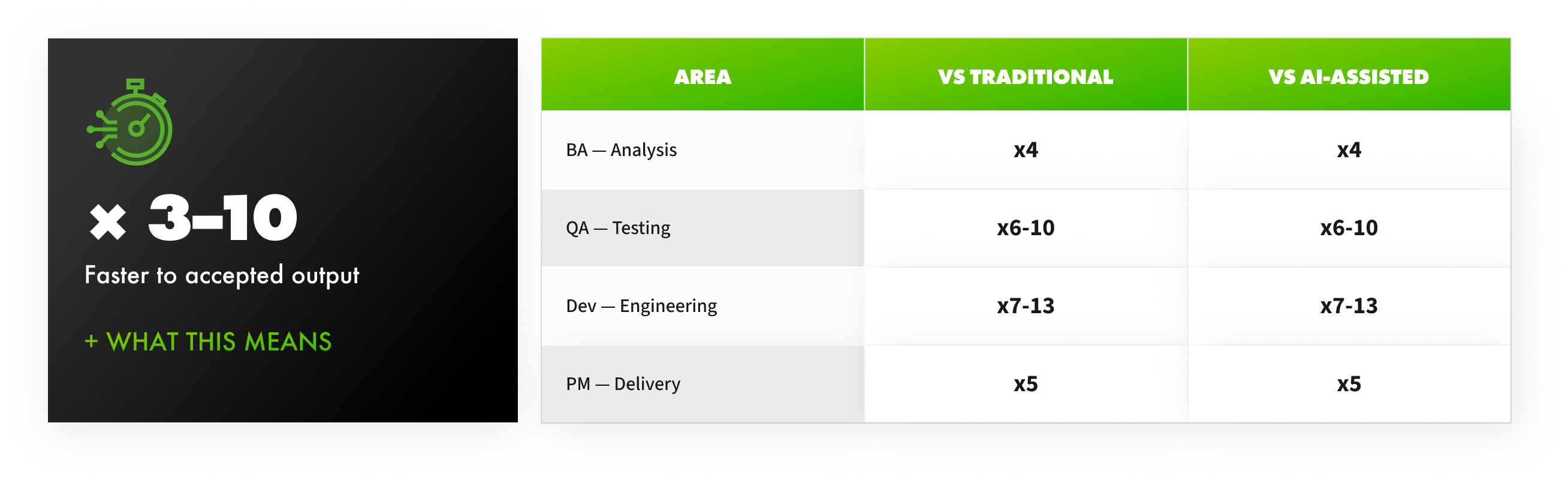
Time to accepted output was measured from task assignment to approved completion, including AI generation, engineering review, revisions, and acceptance. All approaches used the same models and identical acceptance criteria. Results are based on project-specific engineering tasks rather than generic coding benchmarks.
How we estimate productivity gains
The calculator is based on Amdahl’s Law, which models how improvements in one part of a process affect the overall delivery time. We account for the share of engineering work, the portion generated by AI, review effort, and the complexity of the remaining work.
Use your own numbers to estimate realistic productivity gains for your team.
How we adopt an AI-native SDLC?
ASSESS
We assess your current delivery process and identify where AI brings measurable business value first.
- Highest-impact workflows identified and prioritized
- Live map of code, documentation, and project context
- Governance aligned with your
security and compliance
requirements
Assessment + ROADMAP
ACTIVATE
We deploy the AI-native delivery system into your engineering workflow and demonstrate measurable improvements within weeks.
- Production-ready in hours, without replacing your existing tools
- An AI architect configures workflows around your delivery process
- Specifications, decisions, and engineering conventions become shared project context
First measurable gains in weeks
SCALE
We extend the system across your teams and until it is, fully owned by your organization.
- Shared workflows and reusable engineering knowledge
- Human review remains part of production governance
- Every new project strengthens the shared engineering system
Owned by your team
The operating system behind Your AI-Native SDLC
AI ENGINEERING KIT
A governed delivery system built around your codebase, documentation, and engineering workflows. It provides shared context, reusable skills, automated verification, and AI agents that work within your existing development process, with your engineers always approving production changes.
WHAT YOU GET
- Works directly with your live codebase through indexed repositories and project context
- Deploys in under an hour, without replacing your development platform
- Integrates with your existing development tools
- Applies governance, approval workflows, and review gates to every AI-assisted change.
- Captures project knowledge and turns it into reusable engineering assets
FULLY MANAGED
We deploy, maintain, and continuously improve the AI Engineering Kit as your delivery evolves. Your team uses the system without having to operate it.
.security
How Do We Protect Your Code and IP?
Your code, data, credentials, and intellectual property remain under your control. The AI Engineering Kit operates inside your environment and follows your security policies.
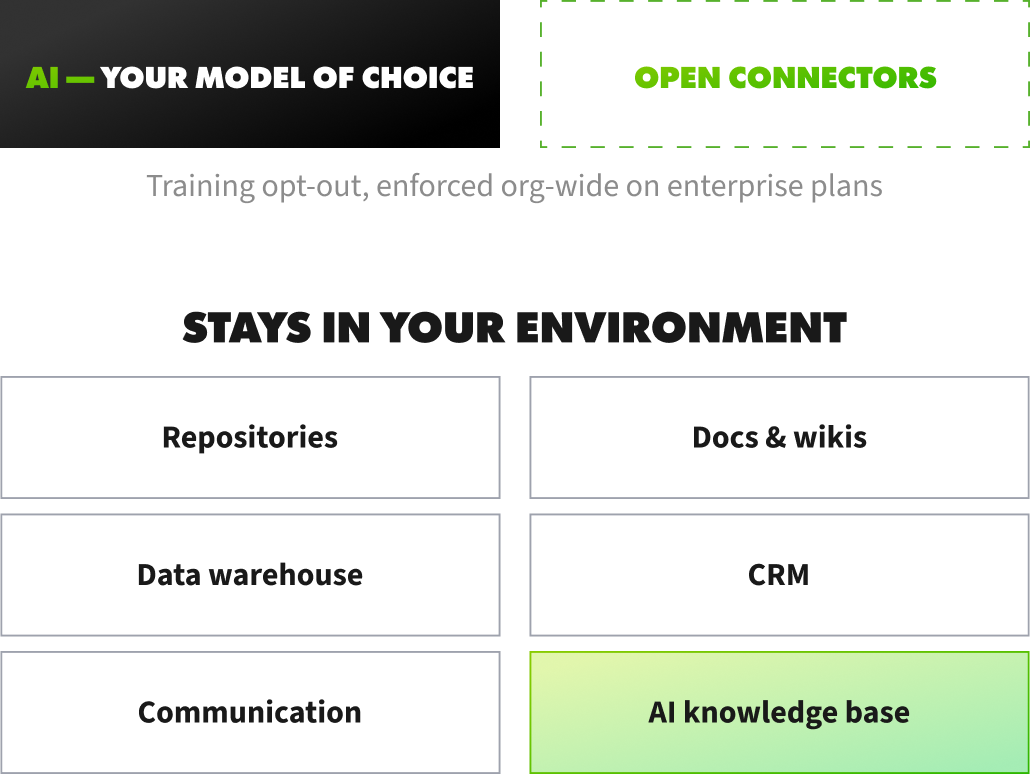
- FILES STAY LOCAL. Your source code remains in your repositories. The Kit indexes it locally without moving it to a separate platform.
- SECRETS STAY IN YOUR VAULTS. Credentials are referenced by location, never stored.
- GOVERNANCE BY SECURITY GRADE. Each project gets a security grade that defines what AI may access and which actions need human approval.
- FULL AUDIT TRAIL, GIT-NATIVE. Every AI-assisted change is reviewed, approved, and recorded through Git history and your existing engineering workflow.
- ANY MODEL, ON YOUR TERMS. Choose the models that meet your security, compliance, and cost requirements. Switching models is a configuration change.
.flexibility
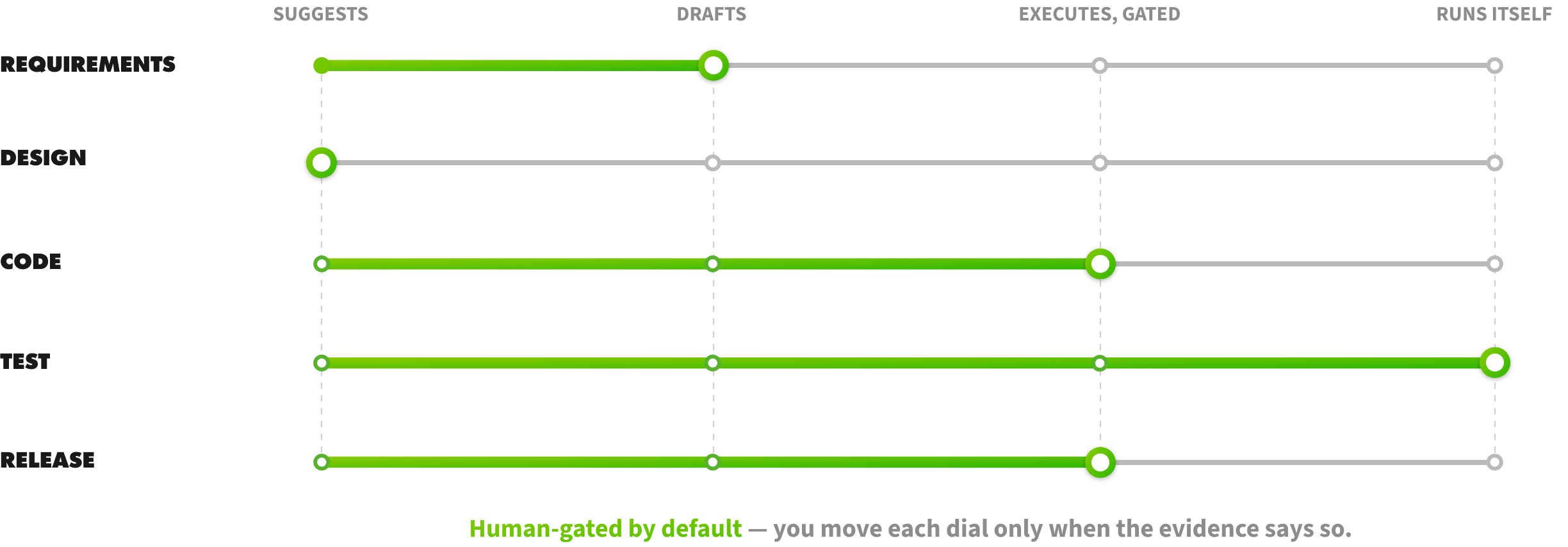
How Much Autonomy Does the AI Get?
AI autonomy is configured separately for each stage of delivery and can be adjusted as your confidence grows.
AI Tools, Models, and Protocols We Use
The stack is vendor-agnostic. We work with the models, tools, and cloud platforms your policies allow, and switching providers is a configuration change.

AI engineering tools
- Claude Code
- OpenAI Codex
- GitHub Copilot
- Cursor

Foundation models
- Anthropic Claude (Fable, Opus, Sonnet)
- OpenAI GPT models
- Google Gemini

Cloud AI platforms
- Azure OpenAI Service and Azure AI services
- AI-ready cloud infrastructure on Azure Google Cloud, and AWS

Knowledge and retrieval
- RAG pipelines
- LlamaIndex
- vector databases (Pinecone, Weaviate, ChromaDB)

Verification and observability
- Evals
- LangSmith
- Guardrails AI
- NeMo Guardrails
- human-in-the-loop workflows

Protocols
- MCP (Model Context Protocol)
- agent-to-agent communications
.case studies
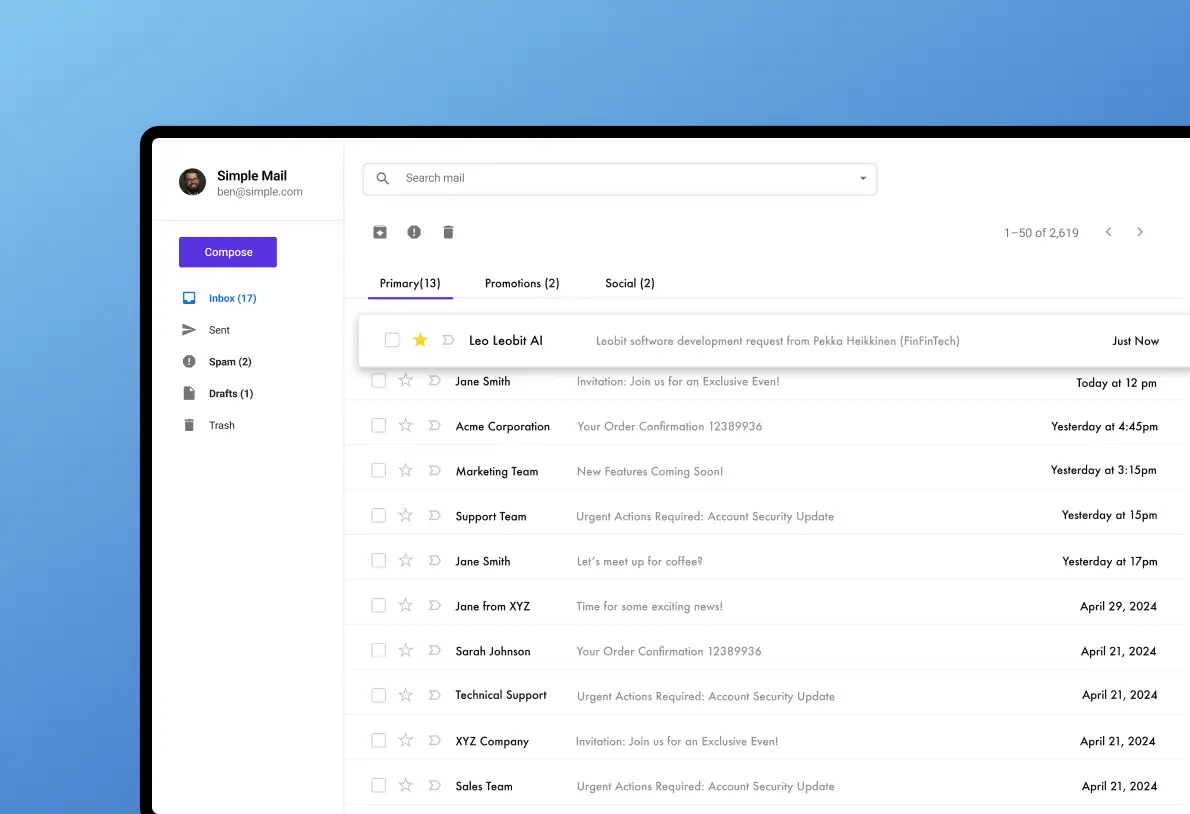
Agentic AI Development for Sales Email Automation and Lead Scoring
The AI Sales Email Auto-Response Solution, or “Leo — Leobit AI,” automates responding to incoming sales emails and website form submissions using GPT technology. It filters and scores leads before generating accurate and personalized responses within minutes, freeing time for sales representatives and ensuring prompt engagement with potential clients.
Agentic AI Development for Sales Email Automation and Lead Scoring

Legal Case Management Platform with Agentic AI
The platform is a leading civil and criminal case management software tailored for defenders and prosecutors within the US judicial system. Its primary goal is to streamline workflows, drive cost efficiencies, and enhance the effectiveness and agility of legal teams. With its cloud-based storage and robust search functionality, legal professionals can efficiently enter, archive, search, retrieve, and generate reports on case information.
Legal Case Management Platform with Agentic AI
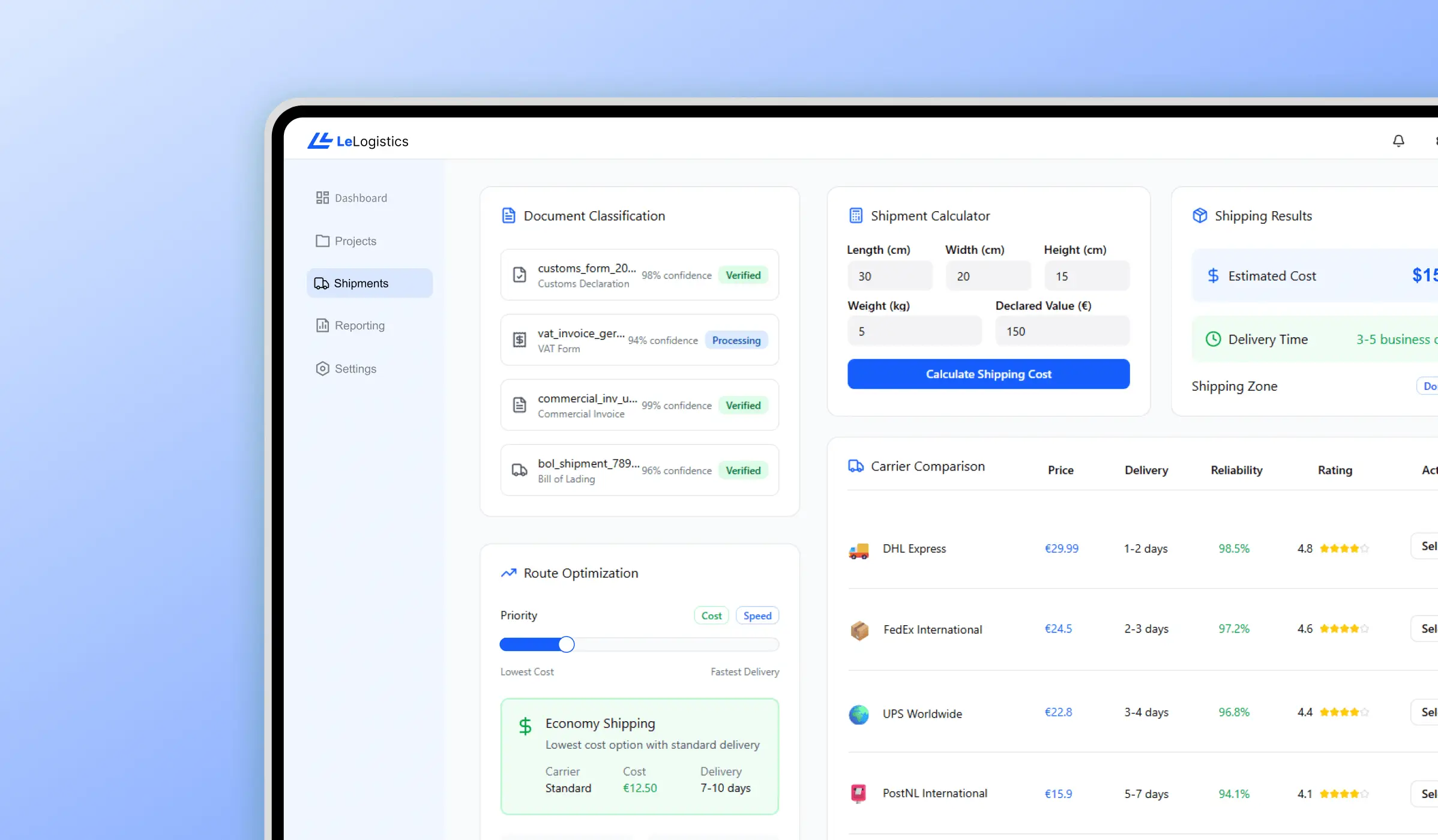
Intelligent Shipping Orchestration Platform
Leobit helped a global logistics enterprise automate its end-to-end shipping operations using AI-driven tools and custom software development. The solution included shipment tracking, automated documentation, intelligent carrier selection, and multi-agent AI systems.
Intelligent Shipping Orchestration Platform
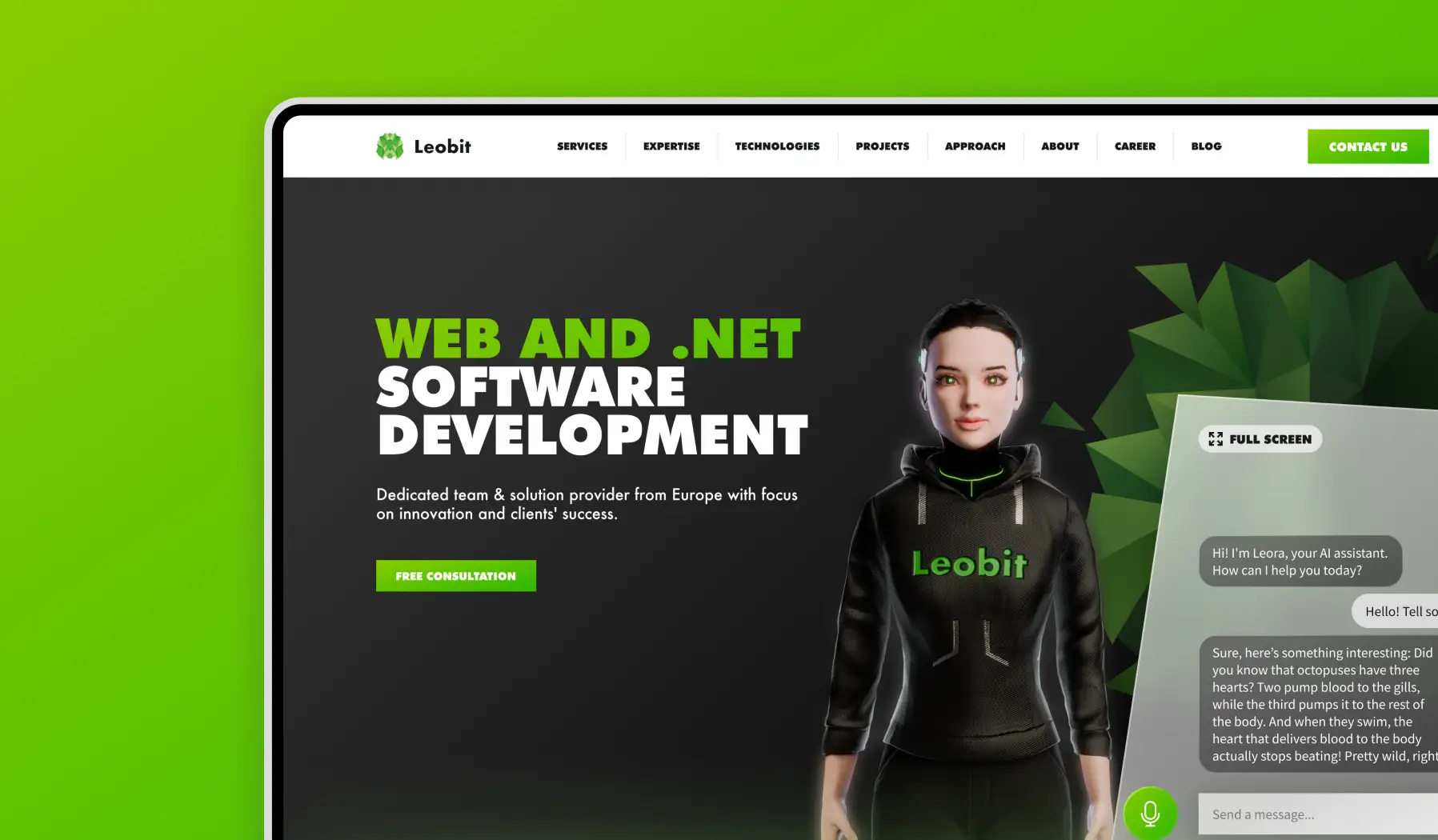
Leora: AI-Powered Voice Sales Assistant
Leora is Leobit’s AI-powered vocal sales assistant designed to deliver instant, tailored responses to potential clients. Unlike traditional chatbots, Leora uses voice interaction and advanced AI to simulate natural conversations, so that prospects or customers can receive the information they need without delay or manual search. Trained on the company’s data and case studies, Leora reflects Leobit’s domain knowledge and service portfolio.
Leora: AI-Powered Voice Sales Assistant
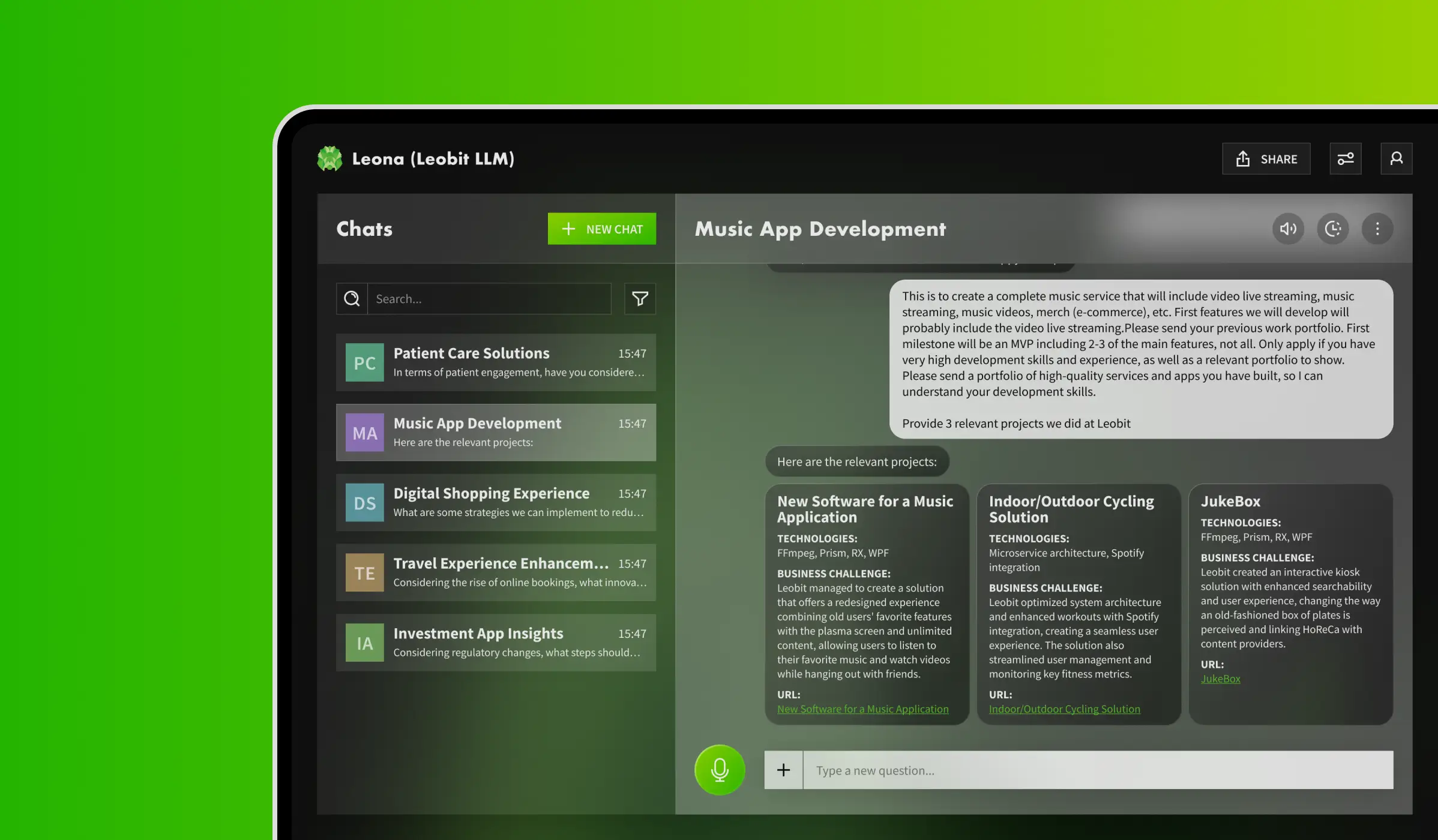
Leona — AI RFP scoring, proposal generation & bidding solution
Leona is an AI-driven solution developed by Leobit to streamline project evaluation and RFP (Request for proposal) management on outsourcing platforms. Acting as an AI-powered virtual assistant, Leona automates the categorization and scoring of opportunities based on their relevance and potential value. It prepares custom business proposals aligned with specific industries and case studies, significantly reducing time and effort. This allows teams to concentrate on high-priority leads and drive business growth.
Leona — AI RFP scoring, proposal generation & bidding solution
Why Choose Leobit
- Microsoft Solutions Partner for Digital & App Innovation and Data & AI
- 6+ years of AI development for internal needs and client projects
- 25+ AI projects delivered across FinTech, InsurTech, PropTech, LegalTech and other industries
- AI-first organization with a corporate LLM, AI-native software delivery built around governed workflows, human review, and reusable knowledge, and 25+ AI agents embedded in daily operations
- Global Tech Award winner for AI Excellence
- Anthropic Claude Certified Architects and Microsoft Azure AI engineers on the team
- ISO 9001:2015 and ISO 27001:2022 certified
