Leobit

In August 2025, TypeScript overtook Python and JavaScript to become the most used language on GitHub: 2.6 million monthly contributors, up 66.6% in a single year. GitHub’s Octoverse report directly names the driver. Type systems reduce ambiguity and catch LLM errors before they reach production, so teams that rely on coding agents gravitate toward typed stacks.
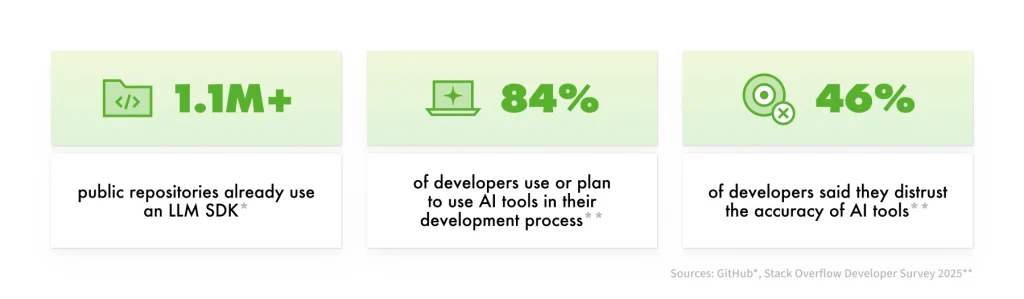
That shift changes how you should choose technologies. Performance and hiring still matter, but AI-driven development adds a new criterion: how well a stack supports the AI agents that now write a growing share of production code. More than 1.1 million public repositories already use an LLM SDK, which corresponds to a 178% jump year over year.
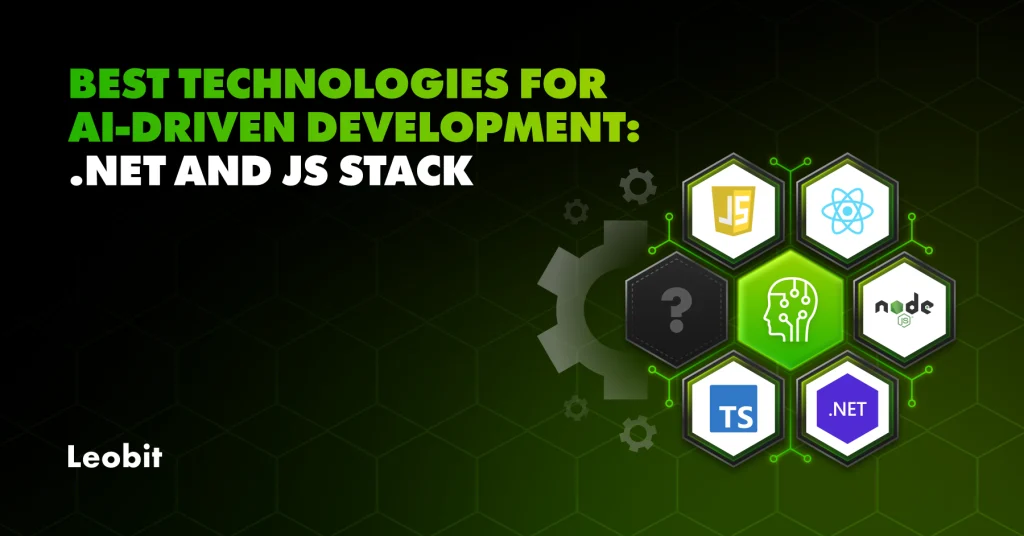
No single technology is best for AI-driven development. Based on industry data and our own AI-native SDLC projects at Leobit, the practical answer splits in two. .NET is the stronger fit for enterprises with compliance requirements and long product lifetimes, while SMBs and growth-stage companies usually get more delivery speed from the JavaScript stack built on Node.js, Next.js with React (also known as React.js), and TypeScript.
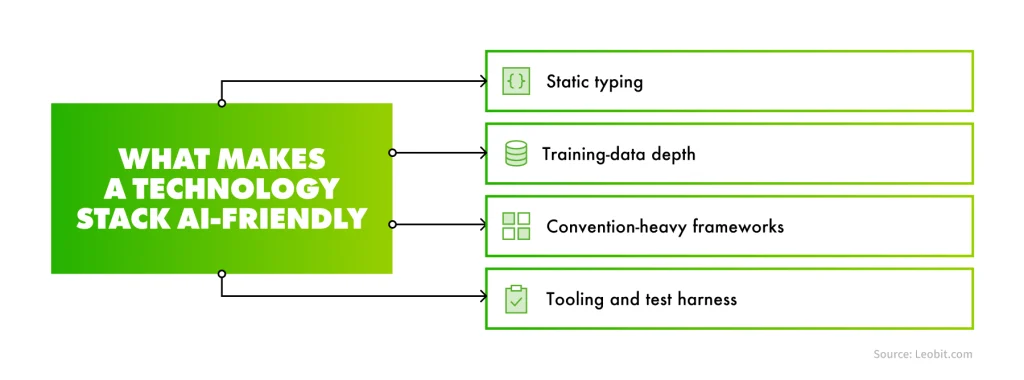
This article breaks down what makes a stack AI-friendly and compares .NET with the JavaScript stack on verified data. It ends with a decision framework you can apply to your next project.
So let’s get started.