Leobit


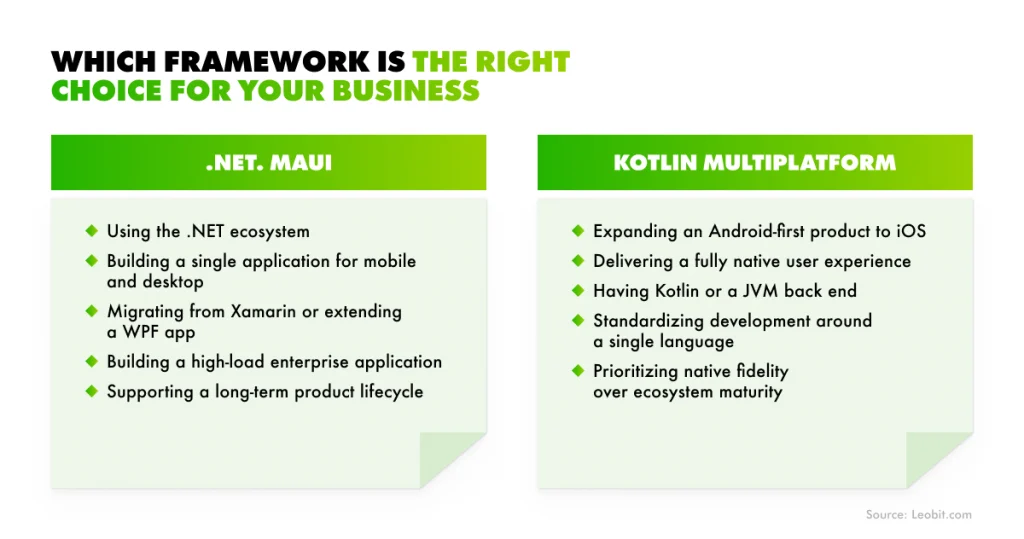
McKinsey’s 2025 analysis of CIO budgets in the AI era shows that companies generating the highest returns from technology spending are those that make deliberate decisions about which platforms and applications to keep, scale, modernize, or retire. Choosing a framework for cross-platform app development is exactly this kind of strategic decision.
When a team commits to .NET MAUI or Kotlin Multiplatform, it also commits to a specific vendor ecosystem, programming language, and long-term maintenance model. The longer the framework remains in use, the more expensive and complex it becomes to change direction and migrate your code base.
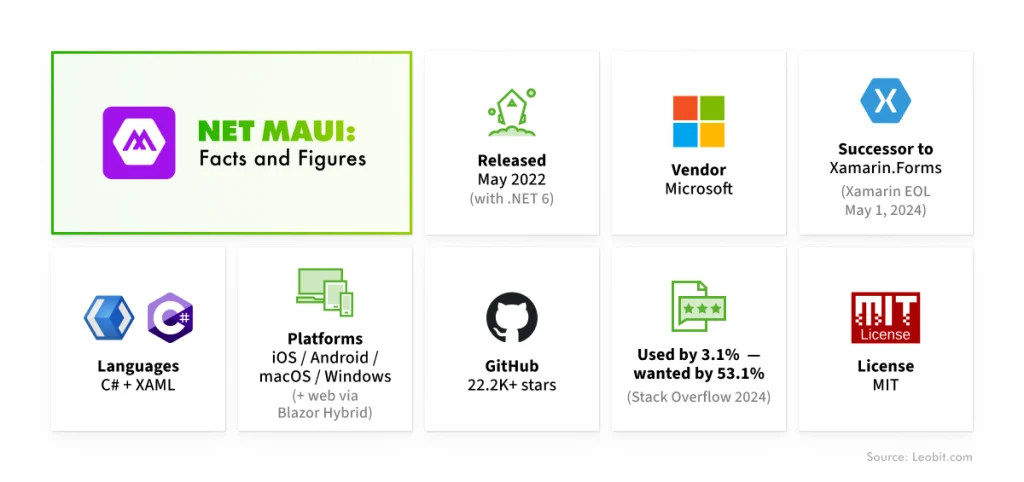
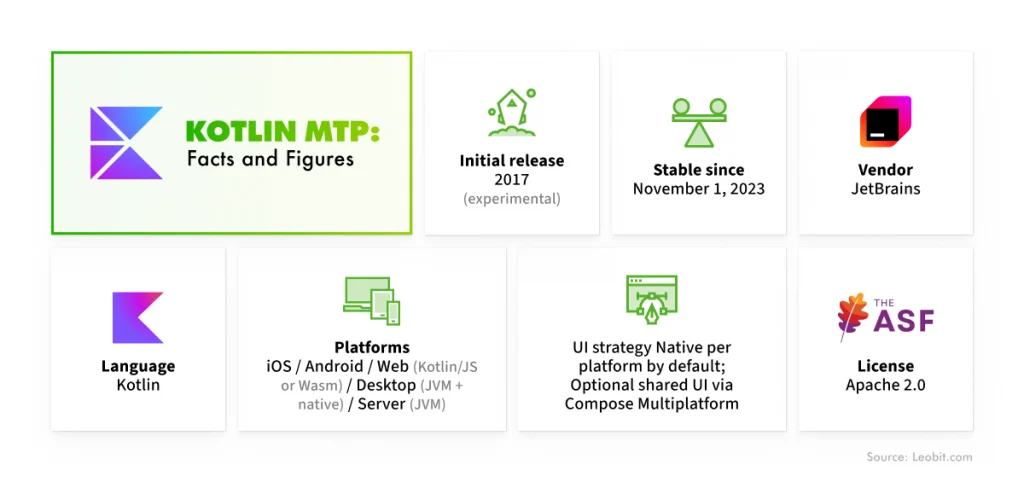
This choice has become even more important in 2026 than it was just a few years ago. Microsoft ended Xamarin support in May 2024, pushing legacy Xamarin teams to select a modern alternative. For many businesses, the choice stands with .NET MAUI, the direct successor of Xamarin. At the same time, JetBrains moved Kotlin Multiplatform to Stable in November 2023 and addressed one of the main concerns CTOs previously had about its maturity.
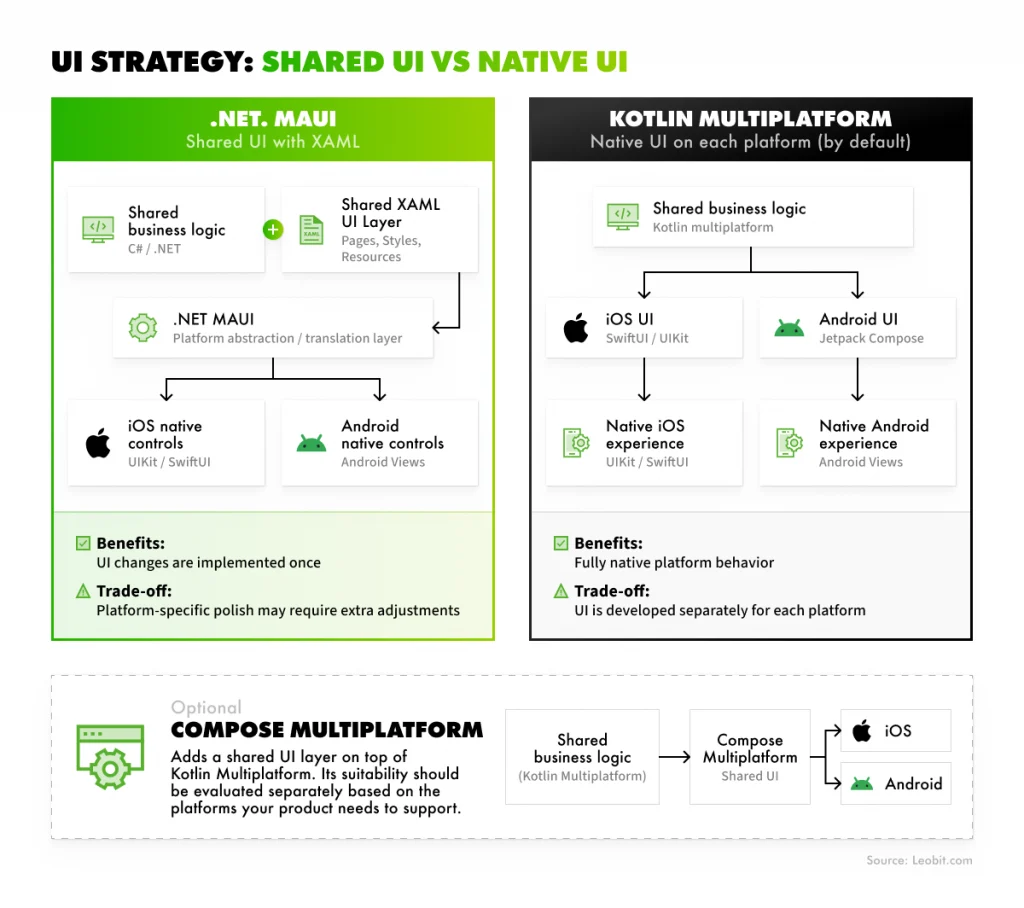
Today, both .NET MAUI and Kotlin Multiplatform are production-ready frameworks that allow teams to build applications for iOS, Android, and other platforms from a shared codebase.
In this article, we define both technologies and compare them across ten key parameters that influence real business decisions.