 Leobit
Deposit Insurance Regulatory Reporting and Compliance Platform
Replacing a manual Excel-based reporting system with a centralized, scalable digital platform for automated data collection and real-time analytics
ABOUT the project
- Client:
- Deposit insurance corporation
- Location:
-

Bahamas
- Company Size:
- 10+ Employees
- Industry:
-
FinTech / Insurtech
- Solution:
-
Web App

Leobit helps a Caribbean-based financial company build a platform that digitizes and automates the entire regulatory reporting relationship between the deposit insurer and its member banks. The solution will allow banks to submit their required declarations directly through the system instead of manual paperwork, while the insurer will be able to use it to review submissions, flag issues, and track compliance. The platform will also provide automation for many financial workflows, such as calculating premiums, generating invoices, and tracking payments, while issuing Letters of Comfort once submissions are reviewed and approved. One of the upcoming implementations is an AI-powered workflow that will retrieve data from financial documents and distribute it across the platform. Another critical feature is built-in dashboards that give leaders real-time visibility into bank performance, alerts, and overall program health.
The project is ongoing, but we’ve already done a lot of work, helping the client shape their infrastructure and building functionality that will serve as a foundation for a large deposit insurance platform. Whether it’s automation or analytical features, we continuously work on enhancing the platform the way it helps the client handle their business operations better.


Customer
The customer is a Caribbean-based independent statutory corporation that provides deposit insurance services in the region. It administers a local deposit insurance scheme, protecting eligible dollar deposits held at licensed banks and credit unions.
BUSINESS CHALLENGE
The customer ran its insurance and risk management processes through a massive Excel-based system hosted in SharePoint, with multiple sheets updated each quarter. This setup limited scalability, automation, and the ability to quickly analyze data during transactions or critical events. The client decided to transition from manual spreadsheets to a centralized, scalable digital platform that would automate deposit insurance reporting workflows and ensure real-time analytics.
Why Leobit
We had previously collaborated successfully with one of the customer’s partners, who recommended Leobit for the project. After interviewing our specialists, the client was impressed by our deep technical expertise and readiness to take ownership of the solution.
Project
in detail
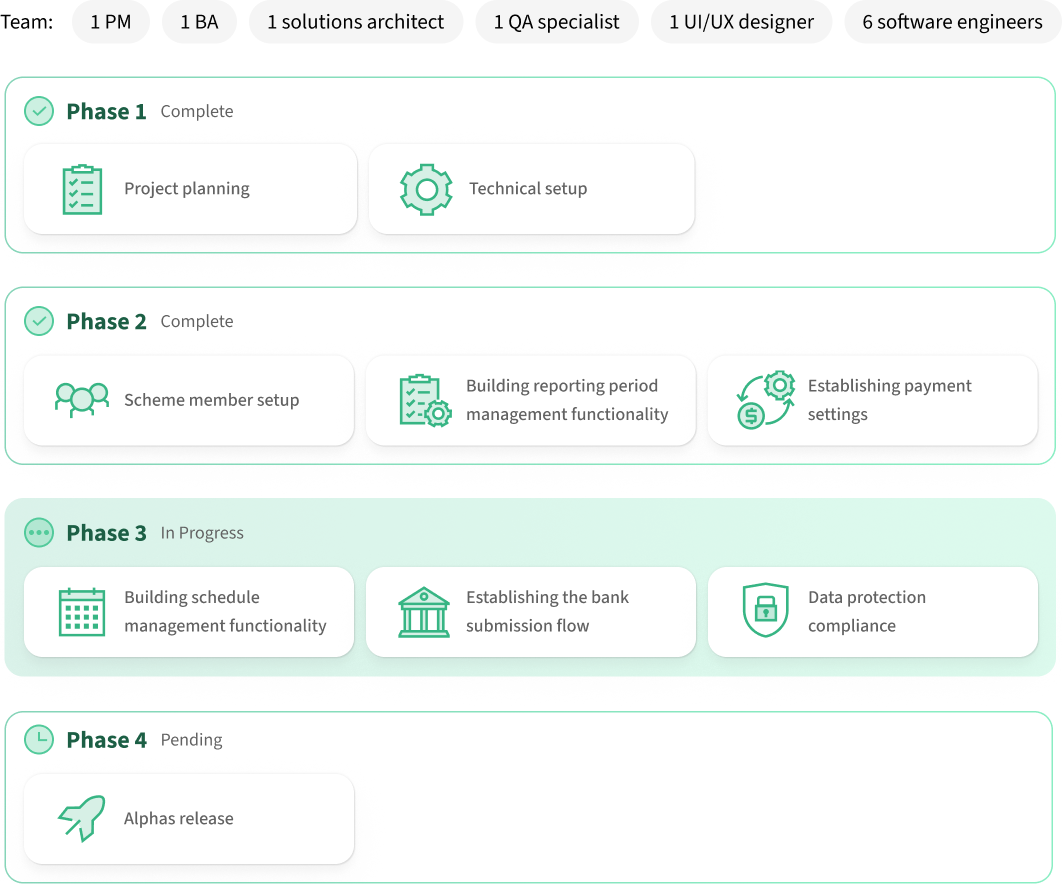
Leobit assembled a team consisting of 11 specialists to cover all the critical project requirements. We established a project roadmap designed according to the Agile methodology with two-week sprints.
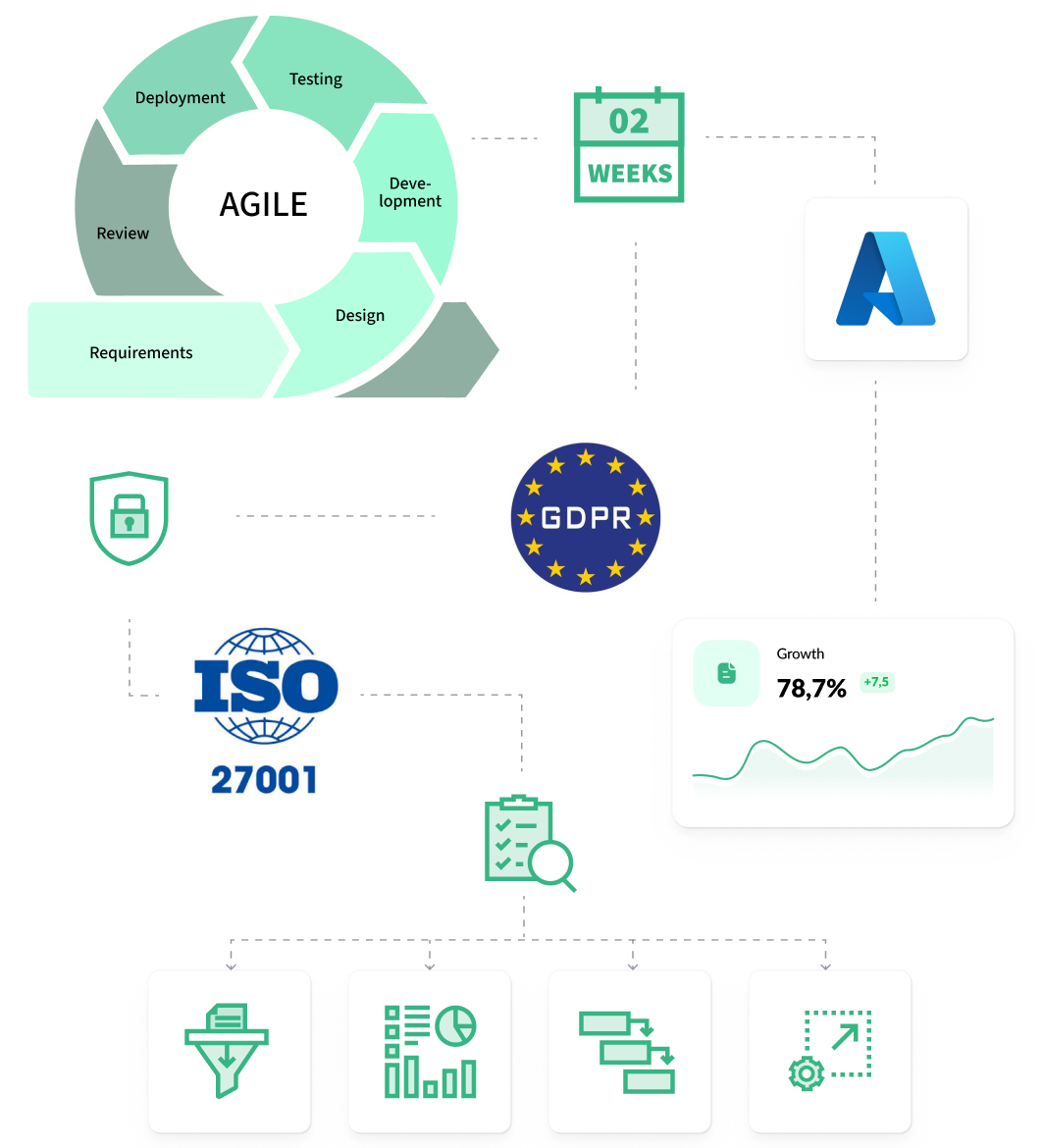
At the initial planning stage, we analyzed the customer’s existing data approach and set the key project objectives:
- Consolidate and automate data ingestion through a web-based interface and unified storage
- Introduce interactive data visualization and reporting
- Redesign workflows to support transactional processes like submissions, approvals, and pricing updates
- Improve accuracy, traceability, and scalability for long-term operational growth
After that, we proceeded by establishing the solution’s fundamentals.
Our solutions architect worked in collaboration with the customer’s internal team to come up with a blueprint of an Azure-native monolithic architecture. The core focus areas were a security-first approach, ISO 27001 and PIPA compliance, and GDPR-readiness. The blueprint for the solution’s architecture is adjusted dynamically as the project evolves.
We started working on more specific system features. In particular, our team created the scheme member setup that allows the customer to manage all scheme members centrally. We also built payment functionality and established a period management feature for reporting. The Leobit team is currently developing functionality for user access and authentication management, platform configuration, and schedule management and distribution. The project is ongoing, and after the release of the aforementioned features, we will continue working on other core functionality, such as AI-powered document processing or interactive dashboards.

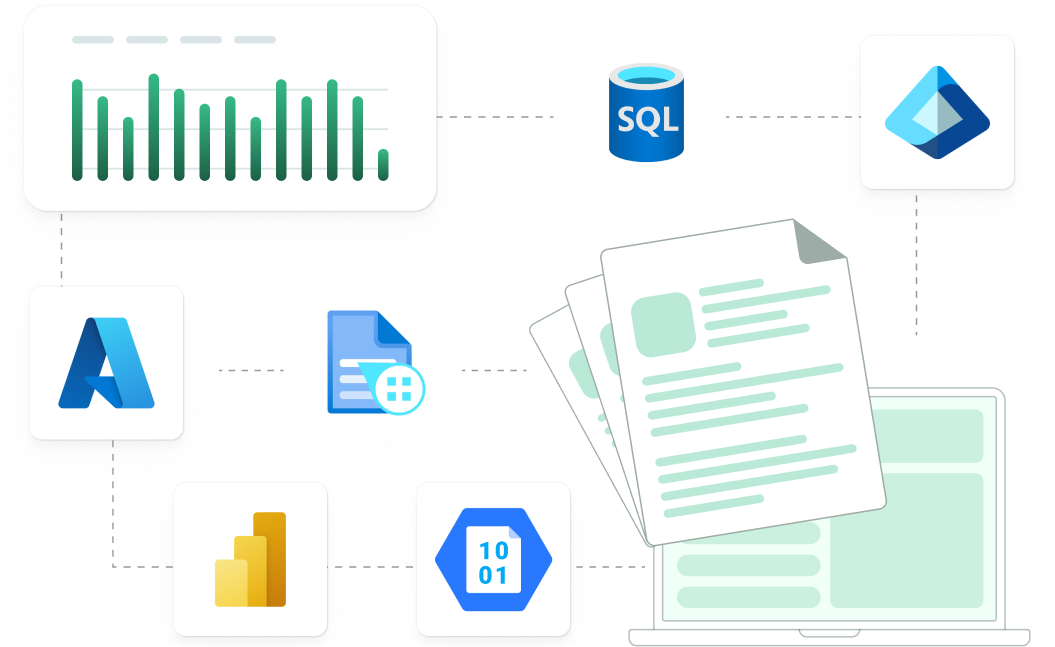
Strong Architectural Foundation
Our solutions architect collaborated with the customer’s team to design a blueprint for the system’s architectural foundation. The stack centers on Azure, chosen for its deep integration with the customer’s existing Microsoft 365/Power BI ecosystem, strong SLAs, and superior Document Intelligence for parsing the customer’s fixed-format submission forms.
A relational SQL database ensures the data integrity and transactional guarantees the customer requires. Azure Entra ID handles secure authentication (OIDC/OAuth 2.0, MFA, SSO) for both internal staff and bank users, while a VPN/private network layer adds network-level isolation for the sensitive submission and invoicing flows.
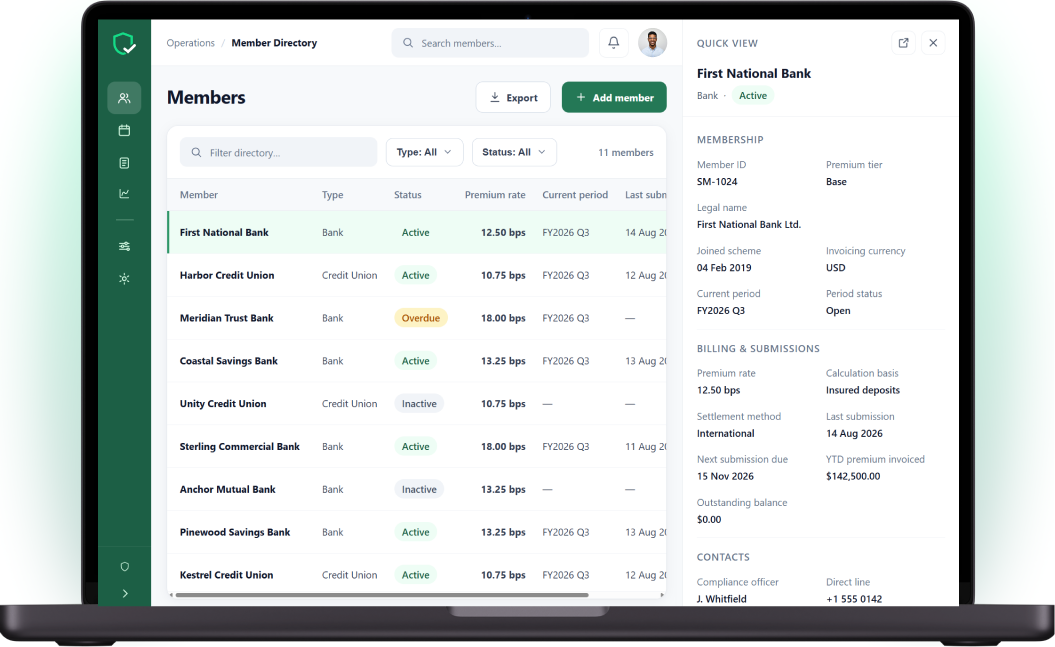
Scheme Members Setup
We built a centralized administration portal that gives the customer a single place to manage all scheme members, including banks and credit unions. Instead of handling member data across multiple systems, administrators can access a complete member directory and maintain organization profiles. This feature also allows users to manage key settings, such as notification recipients, invoicing and payment details, trigger configurations, and other billing-related information.
This functionality simplifies day-to-day administration by providing an intuitive interface for updating member details. It also gives our client better visibility over their end-customers.
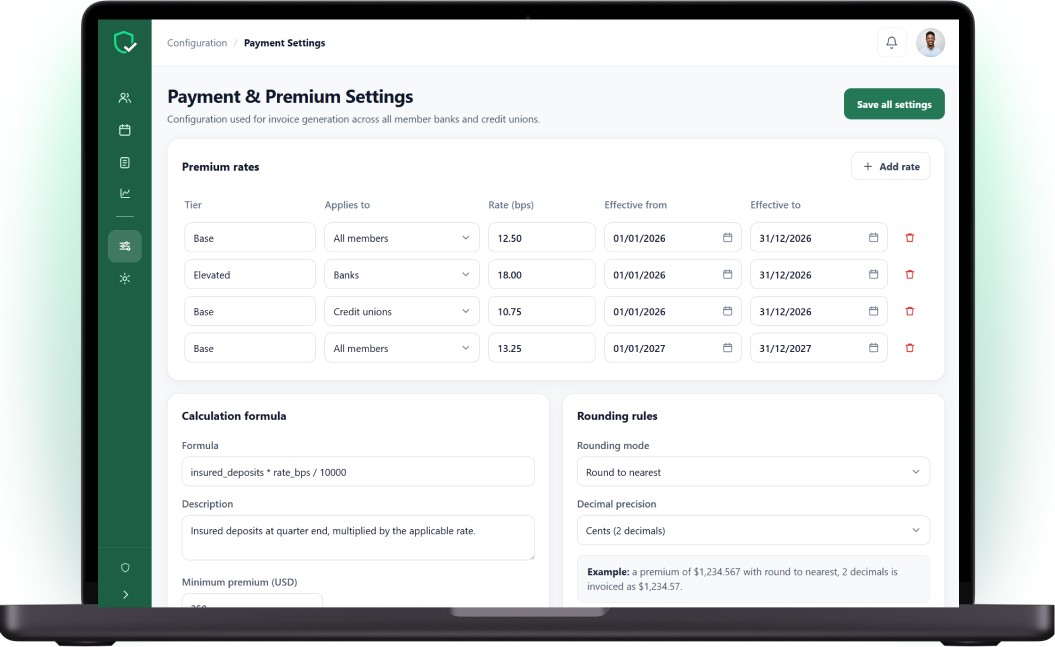
Payment Functionality Setup
We created functionality that enables centralized management of payment and premium settings used for invoice generation across multiple banks and credit unions. Authorized users can access a single administration interface to view and maintain payment routing details, configure premium rates, define calculation formulas, set rounding rules, and manage effective dates for different configurations.
The result is a more efficient billing process with fewer errors and better control over payment operations.
Reporting Period Management
The solution already has a feature allowing the client to manage fiscal reporting periods and monitor end-to-end scheme operations within a structured reporting cycle. Users can view all reporting periods, create new periods based on fiscal quarters, and access detailed period information including key milestones, current status, and next required actions.
This provides the client with greater control and visibility into insurance reports the system delivers, ensuring better compliance. Additionally, this feature makes managing reports a more convenient and organized process for the users.
The Journey
Behind Our Success
Technology Solutions
- Contribution to a blueprint for an Azure-based solution using services like Azure SQL Server, Azure Document Intelligence, Azure Entra ID, etc
- Scalable deposit insurance platform relying on .NET-based back end and front end powered with Angular
- Deep integration with the customer’s existing Power BI/Microsoft 365 ecosystem
Value Delivered
- End-to-end ownership of a complex software development project, from initial concept to delivery
- Proactive contribution to architecture decisions and feature improvements
Business analysis support to align the solution with the client’s strategic objectives - Agile delivery model enabling parallel development and faster feature releases
