Leobit


In the race to innovate and deliver software faster, quality is often pushed to the back burner. But this strategy carries real financial consequences. According to the 2025 Quality Transformation Report, 40% of companies say poor software quality costs them more than $1 million every year. In the United States alone, nearly 45% of businesses report annual losses above $5 million due to software quality issues.
These figures highlight a systemic imbalance between delivery speed and software resilience. Many teams are so focused on shipping quickly that critical testing and quality assurance practices are often overlooked, with the majority admitting they deploy code without fully testing it.
The problem is, however, that quality issues rarely appear all at once. They build up quietly. A few skipped test cases here, a rushed release there, or documentation that was once created and never updated. Over time, these small compromises turn into technical debt and unstable releases.
What’s worse, by the time the symptoms, like production incidents or growing maintenance costs, become visible, the root causes are already embedded in your processes. This is where a quality assurance assessment becomes critical.
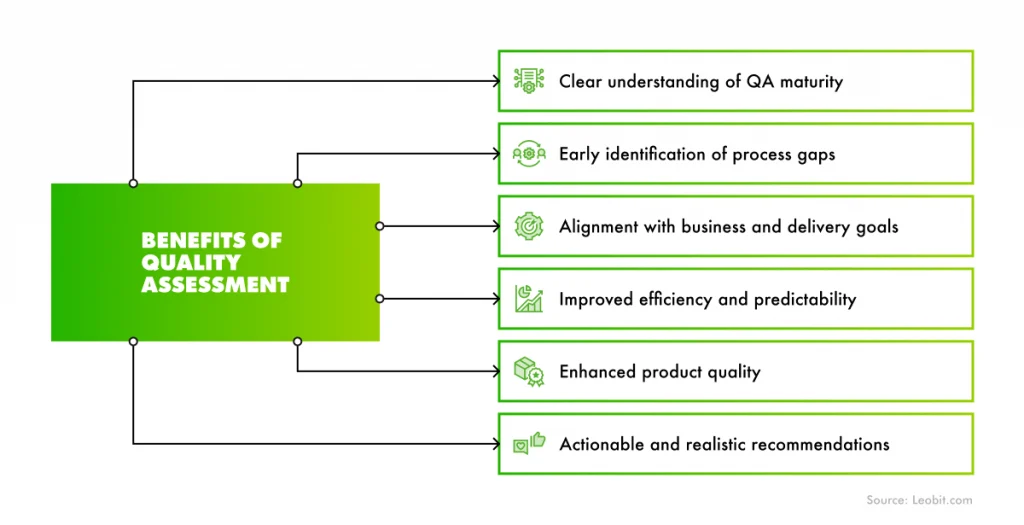
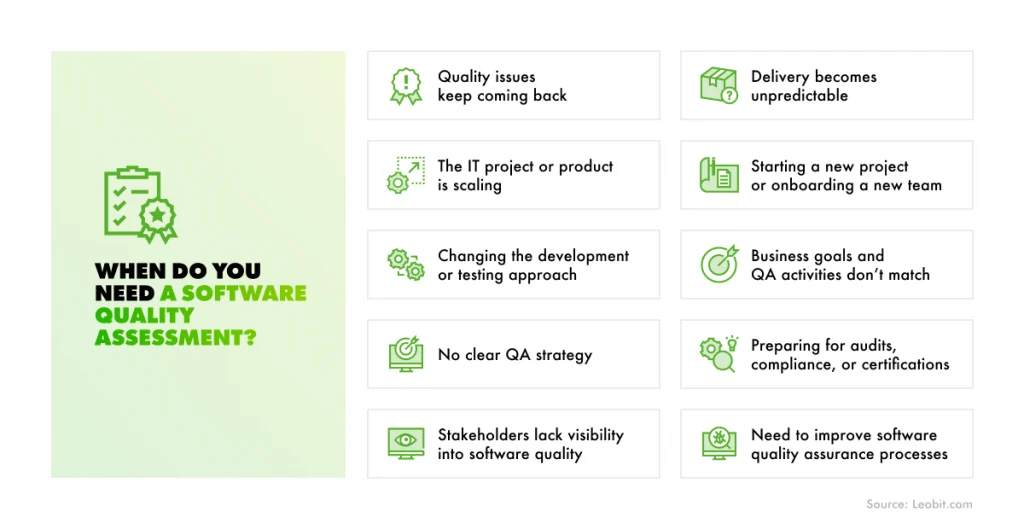
In this article, we’ll describe in detail what quality assessment is, its benefits, key stages, and deliverables. But before you can decide whether you need a software quality assessment or not, you need to understand what it actually is.