However, AI goes far beyond the capabilities of generative solutions. With its excellent opportunities for continuous development, it becomes an essential component in building software for diverse industries and use cases.
In our new article, we provide a comprehensive overview of the opportunities that AI development and adoption offer to businesses. Keep reading to get business insights on modern AI technologies, tips for implementing them, solutions to common challenges, and potential AI use cases for your business.
Overview of the Key AI Adoption Trends
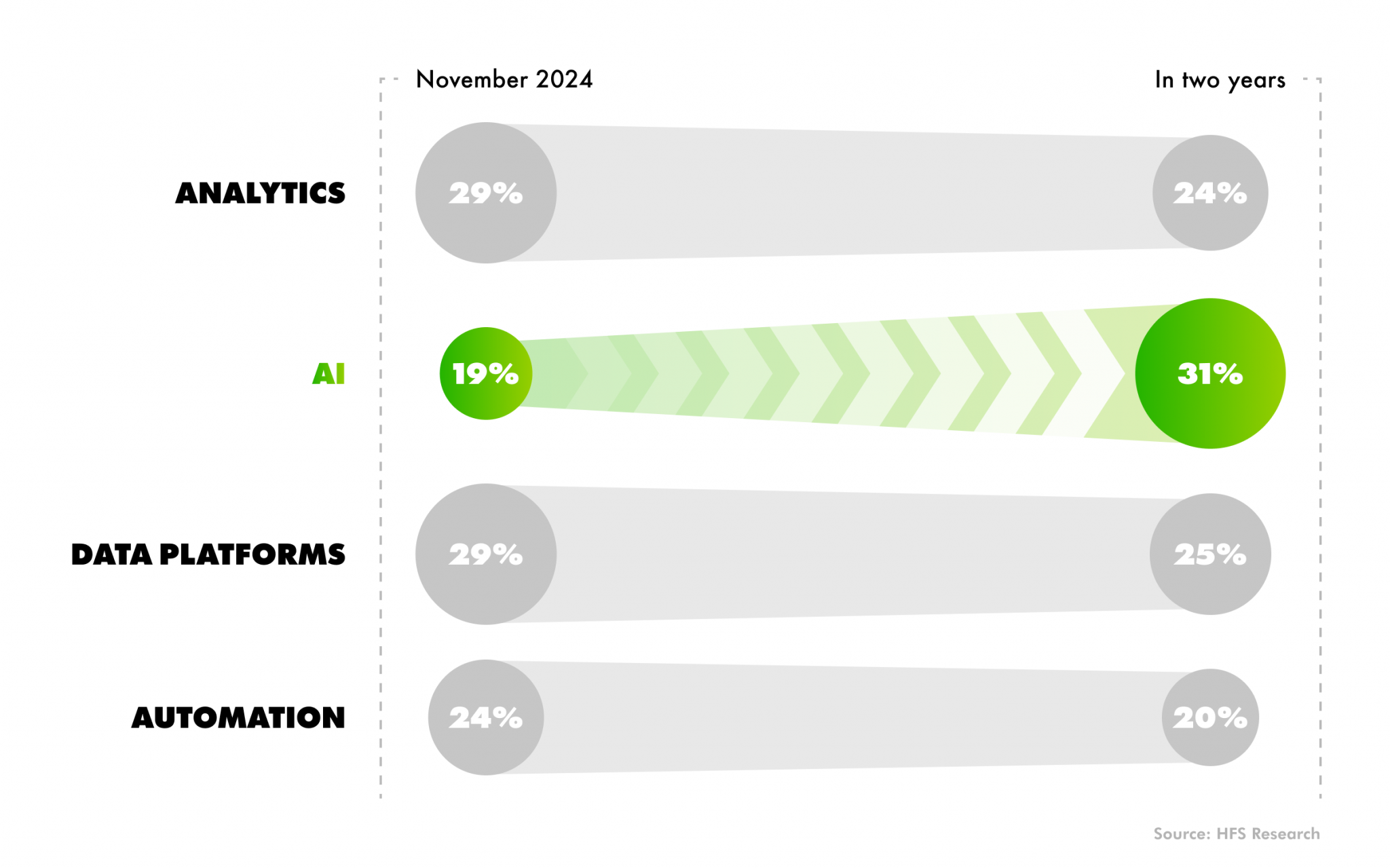
AI adoption creates a variety of opportunities for organizations, including enhanced analytics, automation, and comprehensive support across various workflows. No wonder that artificial intelligence remains the hottest trend in the business domain, expected to receive more investment than analytics, data platforms, and automation in the near future.
Key technology trends
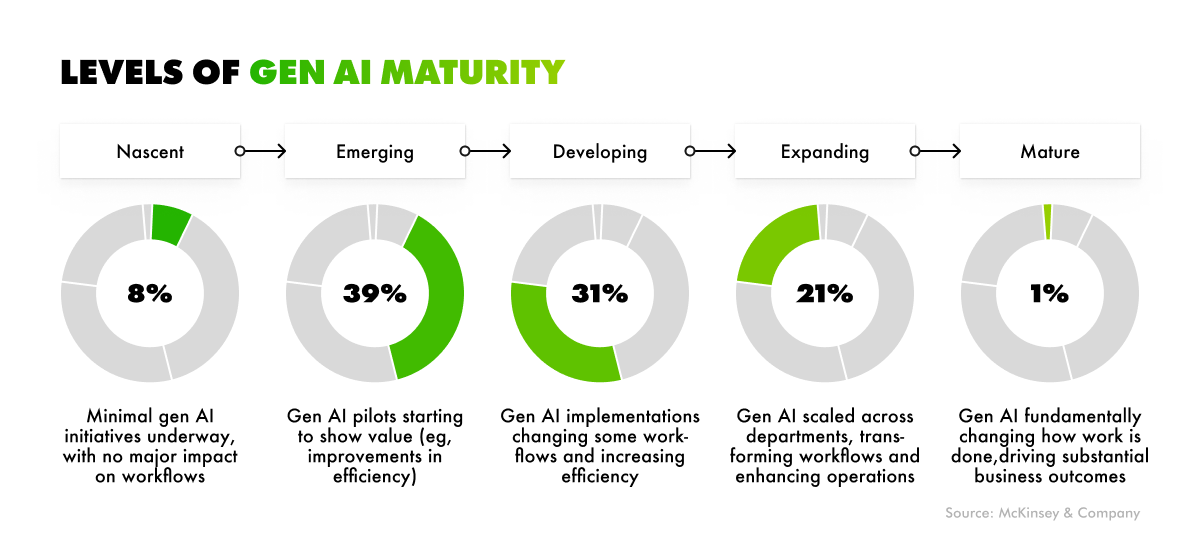
Meanwhile, few organizations have reached the maturity level at which artificial intelligence fundamentally changes business workflows. The image below illustrates the levels of maturity in generative AI adoption according to McKinsey & Company.
Insights on AI maturity levels
These statistics indicate that many companies have not yet fully realized the benefits of AI adoption. This urge to become more mature in adopting artificial intelligence is a significant driver behind the rapid growth of the global AI market, which is expected to hit $4.8 trillion by 2033, a giant leap from $189 billion in 2023.
The key reasons behind the growing demand for AI solutions are the business benefits they can bring. Recent research by McKinsey & Company shows that 64% of business executives view increased innovation as the most significant outcome of AI adoption. Meanwhile, employee satisfaction, customer satisfaction, and competitive differentiation follow at 45% each. Approximately 38% of business executives report that AI adoption initiatives have a positive impact on their organizations’ cost-effectiveness.
An important thing about artificial intelligence is that such solutions rarely operate as standalone components. AI algorithms can support workflows across different operational levels, ranging from routine task completion to strategic decision-making.
In fact, AI has many subdivisions, depending on the workflows they may cover:
Natural language processing (NLP) enables AI to understand, interpret, and generate human language.
Computer Vision allows AI to detect, analyze, and interpret visual content from images and videos.
Speech recognition translates spoken language into text for voice-enabled applications
To enhance document processing and management, as well as enable automated fraud checking, you can integrate AI with optical character recognition (OCR). This technology converts scanned documents and images into machine-readable text.
Not every business needs the same level of AI transformation. For some, basic algorithms for organizing and searching data or generating content are sufficient. Other organizations may need advanced AI that can reason autonomously and provide meaningful suggestions that support human work.
This is where the discussion turns to generative AI vs. agentic AI.
Comparing Generative AI vs. Agentic AI
Two categories of artificial intelligence systems stand out for modern business needs: generative AI and agentic AI.
Generative AI is a type of artificial intelligence designed to produce output, especially text or images, normally requiring human intelligence, typically by applying machine learning techniques to large collections of data. Generative AI is typically built on top of large language models (LLMs), machine learning models that can comprehend and generate human language by analyzing large datasets.
Typically, a generative AI solution consists of the following layers:
Data layer, where raw training data, such as text, images, code, and audio, is stored.
Model layer, an LLM that learns general or proprietary data to generate outputs.
Infrastructure layer, which involves connected cloud platforms or tools for data orchestration and scaling.
Application layer, which integrates the app with a user-defined interface for interacting with AI.
Control and safety layer, which typically, includes tools for moderation, monitoring, and compliance.
One of the most notable examples of generative AI platforms is OpenAI’s ChatGPT. It relies on large language models and historical data from user interactions to generate diverse types of content, such as text, images, or code, based on prompts.
Unlike generative AI, which primarily focuses on producing or reproducing content in different formats based on predefined instructions, agentic AI takes machine learning capabilities one step further. Agentic AI solutions, such as GitHub Copilot or AutoGPT, can autonomously work toward achieving goals, independently analyzing the environment or inputs and proactively adapting to changing conditions.
The core features of such systems include the ability to develop autonomous reasoning and proactively adapt to changing conditions.
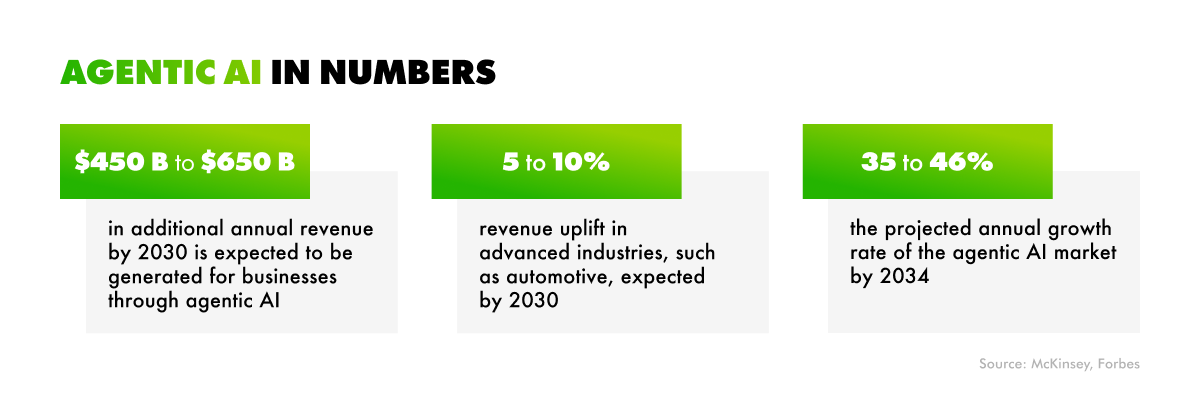
Important statistics on agentic AI
To ensure the autonomy of agentic artificial intelligence, developers often combine multiple specialized agents, each having its own role, that collaborate together.
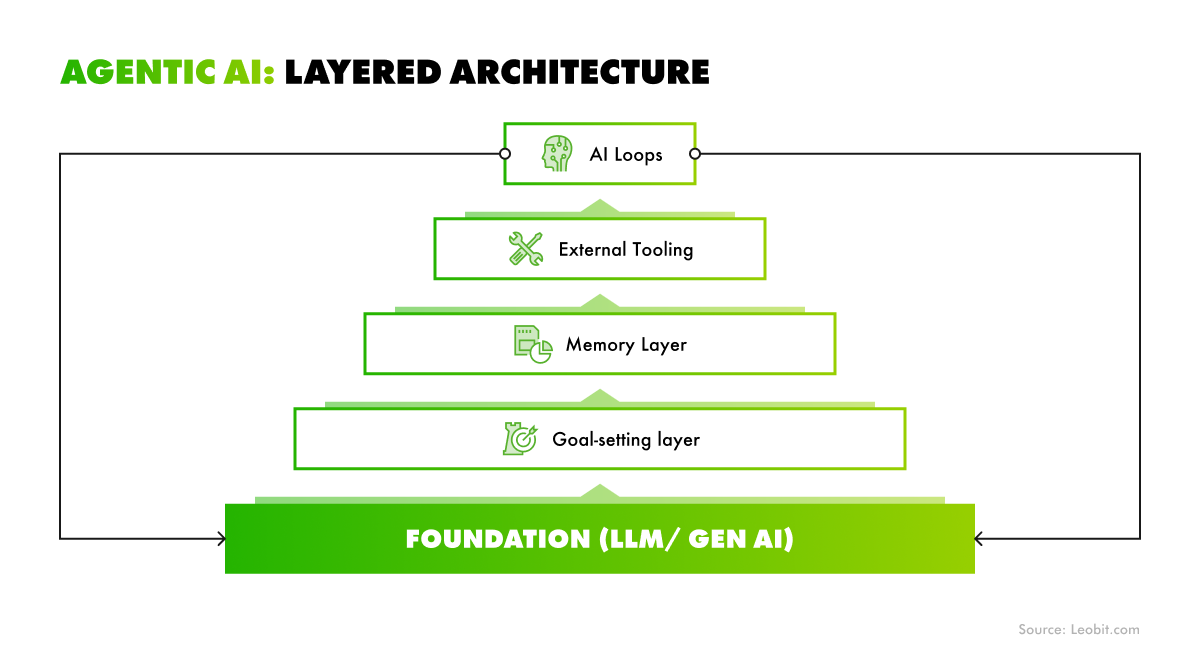
Agentic AI tools also follow a layered architectural approach, which looks as follows:
Foundation. Generative AI (LLM) that can answer prompts, generate documents, write code, or summarize texts.
Goal-setting layer. Typically, it involves an AI agent that breaks goals into steps, using techniques like chain-of-thought reasoning and task decomposition.
Memory layer. It involves short-term scratchpads for reasoning steps and long-term memory based on vector stores, knowledge graphs, and databases.
External tooling. The solution is connected to external tools, such as search engines, databases, or external software, via API calls. The LLM decides when and how to use the capabilities of these tools.
AI loops. To enhance the quality of agentic AI outputs, agents evaluate their outputs and decide whether to refine, retry, or proceed.
Layers of agentic AI
The table below summarizes the key aspects and features that distinguish agentic AI systems from generative AI solutions.
Generative AI (LLMs, etc.)
Agentic AI
Core function
Produces outputs (text, images, code) in response to prompts
Achieves goals by planning, acting, and iterating
Input/output
One-shot: prompt → output
Continuous: goal/task → plan → actions → results
Autonomy
No autonomy, always reactive
Autonomous, can decide next steps without human prompts
Memory
Typically stateless (no persistent memory)
Has short-term and long-term memory for context and continuity
Can call APIs, search web, query databases, control software
While agentic AI offers more powerful capabilities than generative AI, developing and maintaining such a system can be challenging. In many cases, the capabilities of generative AI are sufficient to meet business needs.
We suggest choosing generative AI when you need:
Human-in-the-loop workflows for content creation
Chatbots for support or knowledge search
Automation for simple and repetitive workflows
Meanwhile, agentic AI solutions will be an efficient choice for:
In the following chapters, we will share some tips and best practices that will help you build generative and agentic AI solutions tailored to your needs.
Tips for Implementing Generative AI
Generative AI solutions are typically built on top of LLMs that operate with business-critical data. You can use an existing large language model, such as GPT-5.1, Google Gemini, Meta’s Llama, or LLMs from the Azure OpenAI Service, as a foundation for your corporate LLM. Such solutions offer pre-built templates, algorithms, and configurations you can use for developing your own product.
Here are some tips to help you build a corporate LLM and keep it efficient in the long run.
Prepare data.Build a custom corporate LLM using the right, properly categorized data. Thoroughly select, review, and approve all the data used by your solution. Also, organize it into well-defined categories (by source, purpose, context, and more) to prevent chaos in your LLM and ensure it responds accurately to different types of user requests.
Continuously optimize your model. To reduce the threat of model hallucinations, apply regular tuning practices. One approach is fine-tuning, which involves adapting LLMs to perform specific tasks or follow particular styles by training them on task-specific data. You can also use prompt tuning, a faster, lighter-weight alternative to fine-tuning, where the model is guided through pre-designed keywords and prompts. Another efficient way to reduce model hallucinations is retrieval-augmented generation (RAG). It makes the AI base its answers on accurate, up-to-date external information it retrieves when you ask a question.
Regularly audit your model. This will enable you to identify security vulnerabilities and performance issues on time. A security audit can help you detect potential weaknesses in system architecture, data handling, and response generation to prevent safety breaches. To address any drift or degradation in LLM model accuracy, introduce continuous performance monitoring, data quality checks, and model recalibrations.
A reliable LLM can serve as a foundation for an AI agent designed to handle a specific task or workflow, such as data analytics, customer communication, image processing, etc.
Define its purpose and key parameters, including core and additional workflows, language, interaction format (e.g., text, voice), and integrations with other systems and tools.
Choose an LLM (either an open-source or custom) and tooling to run your agent’s operations.
Train the LLM that powers an agent on data that corresponds to its purpose and your business needs.
Configure the AI logic by designing intent recognition mechanics, using prompt engineering for better output accuracy, establishing fallback mechanisms and conversation tracking mechanics, etc.
Integrate your AI agent with existing systems and platforms, such as ERPs, CRMs, BI solutions, and databases.
Constantly train and optimize your AI agent.
This approach helps maintain strong, efficient performance of your LLM-powered AI agent over time.
Tips for Implementing Agentic AI
Even though agentic AI holds many promises for businesses across industries, over 40% of agentic AI projects are likely to be canceled by the end of 2027. Such solutions are typically more complex than generative AI platforms powered by LLMs. Agentic AI development requires significant technology expertise and, quite often, innovative architectural approaches.
At a fundamental level, the development of an agentic AI platform has a lot in common with generative AI development. You need to define the purpose and use case, invest in training an LLM to power your solution, and constantly monitor and optimize the models.
Meanwhile, building agentic AI capable of efficient autonomous reasoning requires far more than that. Companies shifting toward agentic AI should embrace strategic transformation rather than pursue scattered initiatives.
Here are several development tips that are specific to agentic AI development projects:
Rely on an experienced solutions architect with a creative approach to AI development. Agentic AI thrives on innovation, and combining multiple agents into an efficient system often requires inventive thinking.
Assemble a team with strong experience in working with multiple AI systems and development tools. Depending on your needs, you may need specialists in public AI services and models (ChatGPT, OpenAI API, Google Gemini, etc.) or privately hosted solutions (Llama 3, Mistral 7BGPT-J, GPT-NeoXPhi-2 NVIDIA NeMo, etc.).
Design explicit agency boundaries for your solution. Each agent should be assigned a distinct function. This means separating responsibilities like task comprehension, planning, and execution. By ensuring strong separation of concerns across different agents, you create a system of “checks and balances” that safeguards you from poor decisions made and executed by a single AI agent.
Define a clear hierarchy of agents within your system. We suggest using a supervisor agent that approves or rejects plans, detects reasoning loops, overrides unsafe actions, and reallocates tasks between agents.
Using powerful models for agentic AI development is not enough. Awareness of potential challenges is essential throughout the process. The next chapter offers a more detailed look at AI adoption issues.
Common AI Adoption Challenges and Solutions to Them
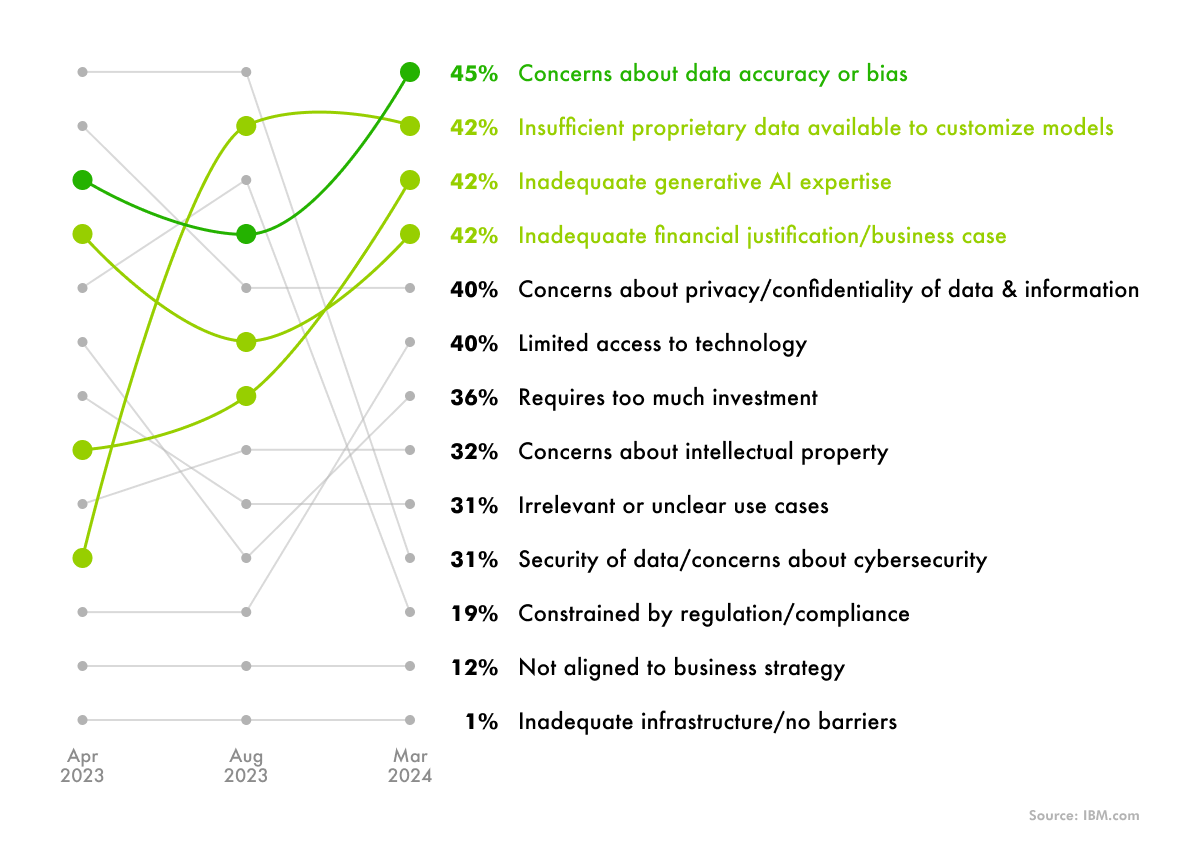
The report on the ingenuity of generative AI from the IBM Institute of Business Value reveals the most significant AI adoption challenges, as identified by business executives.
Common AI adoption challenges
Here, we will focus on the five most significant problems from the list and provide tips to mitigate them.
Common causes of this problem include a lack of proprietary data and LLM hallucinations. Such issues can damage the reputation of customer-facing AI solutions or lead users to poor decision-making.
Solution:
To enhance the quality of AI model outputs and mitigate AI hallucinations, it is vital to invest in LLM augmentation. This involves:
Training the model on thoroughly curated and verified data
Applying well-defined test datasets to evaluate the accuracy of your models
Establishing feedback loops by regularly reviewing the model’s outputs and fine-tuning it based on performance insights
Keeping your training data balanced to avoid over- or underfitting (e.g., if you are classifying dogs and have hundreds of images of corgis but very few of dachshunds, the model can become biased toward the overrepresented class)
Applying meta-evaluation techniques where one language model is used to evaluate another.
Continuous oversight over an AI solution and its outputs is vital for keeping it relevant and efficient.
Lack of proprietary data for model customization
Around 42% of business executives claim this problem to be one of the major AI adoption challenges. AI models are often trained on general-purpose datasets, which may not be sufficient to meet industry-specific needs.
Businesses often need to apply high-quality internal data, such as custom behavioral logs, product and service documents, or operational records. This enables them to create AI systems that:
Reflect the company-specific context
Understand company-specific terminology
Deliver accurate and relevant responses to the users.
Meanwhile, collecting and organizing specific proprietary data for such purposes can be a challenging task.
Solution:
The key to solving this problem is the creation of a curated knowledge base that powers AI tools. If a dataset is too small, you can enhance it by generating synthetic data that supplements real-world examples.
You can also use pre-trained models to cover common tasks, which allows AI developers to focus on more complex workflows. In some cases, RAG can fit as an excellent alternative to fine-tuning. Such an approach enhances your model’s ability to provide responses based on external knowledge without altering the entire model.
Lack of AI expertise
Keeping up with the pace of artificial intelligence application development is a challenging task, and 42% of executives report the lack of technical experience as one of the major AI adoption obstacles. Finding the right specialists for such projects might be challenging. In particular, in 2024, more than half of IT leaders reported that their companies suffered from an undersupply of AI talent, up from 28% in 2023.
The lack of expertise becomes especially critical in projects that involve building company-specific AI models requiring extensive configuration and fine-tuning.
Solution:
The ultimate solution to this problem is relying on a software development team with strong AI expertise. Hiring an in-house team for AI development can be a challenging task. Possible option involves outsourcing the development of your artificial intelligence solution to a team with a proven track record of successful AI projects.
Focus on teams that can build an AI model from scratch, configure, and fine-tune it. Additionally, the team’s use of internal AI tools is a strong indicator of its technical commitment and expertise.
This issue is reported by 42% of business executives as a major obstacle to the implementation of AI. Many organizations struggle to translate the potential of artificial intelligence into business outcomes.
One of the main reasons behind this problem is that decision-makers often hesitate to allocate resources because they don’t have a clear understanding of where and how AI should be applied. Additionally, they often lack specific metrics necessary for measuring the value of AI initiatives.
Solution:
To develop a clear business case for an AI implementation, establish measurable KPIs, such as process efficiency gains and cost savings. We suggest starting with a discovery phase, which will help you:
Outline clear objectives and metrics for measuring project success
Define a clear project roadmap
Align your project expectations with the vision of your AI solutions development team
Outline project architecture and technology stack
Define project risks and strategies for mitigating them.
For instance, McKinsey states that phishing attacks have risen by 1.265% since the proliferation of generative AI platforms in 2022. Even though such a growth may seem insignificant, it is sufficient to signal a correlation between the growing adoption of AI and the rise of cyberthreats.
Solution:
To secure your AI solutions from privacy-related risks, focus on compliance with industry-specific data protection regulations like GDPR, CCPA, and HIPAA. Here are some useful tips:
Regularly audit your AI solution to identify the platform’s security vulnerabilities
Apply robust data governance policies
Introduce advanced data anonymization practices (possibly, with the help of dedicated AI agents) and the most up-to-date encryption measures for sensitive data
Use dedicated model deployments, such as the one provided by Azure OpenAI, which allows you to isolate your data
To avoid issues with app safety in the future, design AI-powered solutions with security in mind from the outset. This will allow you to reduce the frequency, complexity, and resource demand of future risk assessments.
Top AI Use Cases Across Industries
The number of AI use cases is almost impossible to estimate because the technology constantly evolves, developing new capabilities and unlocking new opportunities.
Here we have gathered some common AI use cases across industries in which we are most experienced.
AI in real estate and proptech
AI creates many promises for real estate and proptech companies as its adoption can boost operational efficiency, automate routine tasks and property management workflows, and enhance decision-making. In fact, AI can automate 37% of tasks in real estate, representing $34 billion in operating efficiencies.
AI chatbots and LLM-powered assistants can ensure 24/7 tenant support and handle service requests. This, in turn, allows proptech companies to partially automate customer communication, ultimately reducing support staffing needs.
AI solutions can automatically generate lease agreements, which accelerates contract creation. ML-powered checks can also be applied to ensure document compliance with standards like IFRS 16 and ASC 842.
An AI-powered solution for lease management can be used for automating multiple processes, such as tracking renewals, automating rent collection, sending payments, and delivering contract reminders.
Tenant screening solutions powered with AI automate credit checks, background verification, and risk assessment.
Smart tenant behavior tools can use ML algorithms to analyze tenant behavior. They can be used for tracking occupancy, foot traffic, and space usage, which ensures better layout optimization and upselling.
AI-powered data processing tools can quickly extract key information from long legal and transactional documents.
Property purchase, selling, and renting:
Property search platforms can use AI-powered natural language search to enhance property discovery and deliver personalized listings for buyers and renters.
AI-powered valuation models can analyze local pricing, amenities, and market trends to improve pricing accuracy.
Generative AI can create optimized property and listing descriptions quickly and smoothly.
Property finance and investment:
AI-based real estate financial modeling evaluates profitability and prioritizes high-potential assets.
Mortgage underwriting powered with ML models can accelerate approvals and improve risk assessment.
AI can enhance workflows in property insurance by automating policy issuance and claim processing.
AI-powered due diligence analyzes large proptech datasets, flags discrepancies, and reduces transaction risk.
Overall, AI adoption can help real estate and proptech companies increase operational efficiency, use data more effectively, boost workflows, and reduce the risk of human errors.
AI in fintech
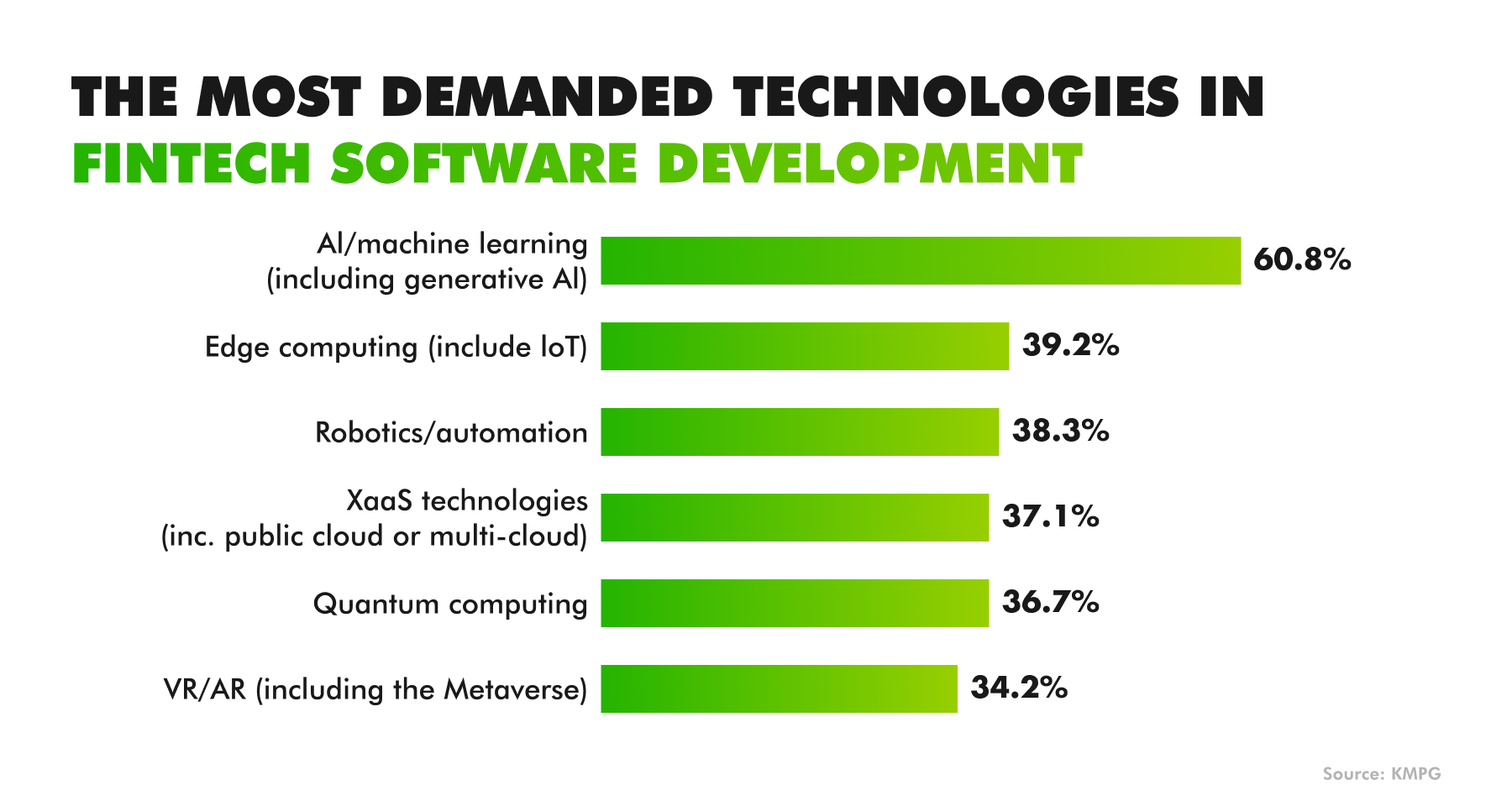
Fintech currently accounts for nearly 70% of AI initiatives. Digital banks, investment companies, and other financial institutions widely recognize the potential of AI, particularly in terms of analytics and workflow automation.
Major technologies for fintech software development
AI systems can accelerate transactions by automating multiple transaction steps, which reduces manual effort across payments, banking, and digital wallets.
ML scripts can standardize transactions using formats like ISO 8583 and ISO 20022. This ensures transaction traceability and helps fintech businesses ensure regulatory compliance.
Artificial intelligence can automate validation, correct errors, and tune the performance of payment systems. As a result, fintech businesses can reduce transaction times from hours to seconds.
AI-driven claim and application processing speeds up insurance claims, lending approvals, and customer onboarding while reducing fraud risks.
OCR solutions powered with AI can scan receipts and invoices to save and store precise data on purchases and transactions, enhancing financial management.
AI chatbots and LLM-powered voice assistants partially automate customer support. They can handle routine inquiries and pre-screen users.
Intelligent document processing tools use optical character recognition, natural language processing, and computer vision to extract, verify, and structure customer data from contracts, invoices, and IDs.
AI can enhance automated management of documents, including their structuring, organization, and change tracking. This allows fintech companies to improve workflow efficiency, compliance, and operational cost control.
Fintech analytics, forecasting, and risk management:
AI tools can use predictive analytics to support financial forecasting, business intelligence, and cash-flow optimization.
AI-driven risk assessment assigns dynamic risk scores for lending, insurance, and investments. Agentic AI solutions can also act proactively and suggest relevant strategies for risk mitigation.
AI-based financial advisors can deliver personalized budgeting, tax, and investment recommendations.
AI can support and partially automate credit score management. ML models use behavioral, transactional, and financial data for real-time risk evaluation.
Fintech security and compliance:
AI solutions can assist with regulatory compliance through continuous monitoring and automated policy validation.
Fraud and anomaly detection tools powered with ML algorithms can identify suspicious transactions in real time.
AI-powered authentication (face, voice, fingerprint), enhanced with OCR or voice recognition capabilities, strengthens identity verification and protects against deepfake-driven fraud.
Precision and safety are essential for the financial domain, and artificial intelligence can ensure it with its advanced analytics and automation capabilities.
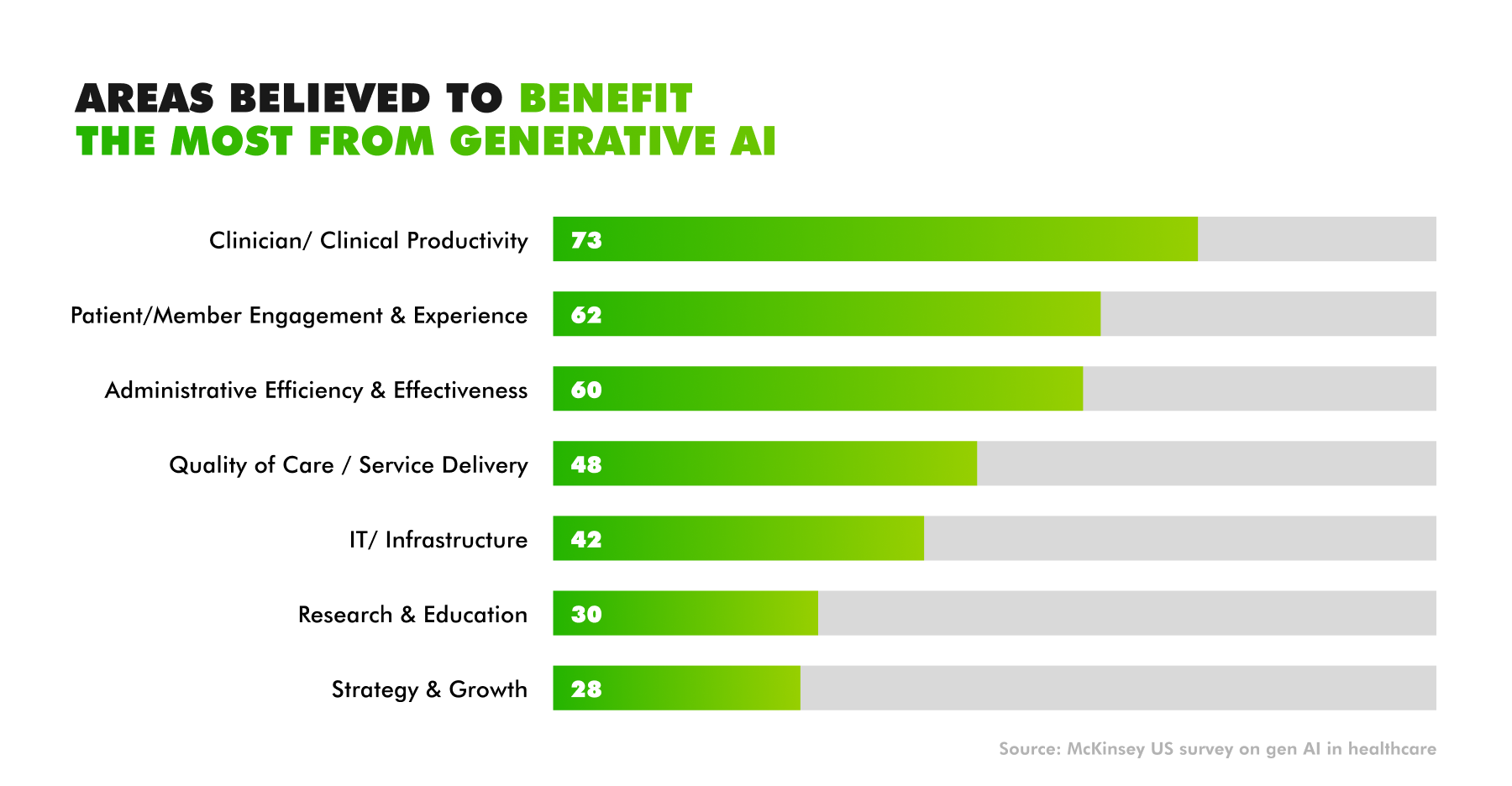
Below is the list of common AI use cases in the healthcare domain.
Patient care & clinical operations:
AI-powered virtual assistants and chatbots can help companies provide 24/7 patient support. They can answer routine medical questions, schedule appointments, and respond to administrative requests, such as ones related to medical insurance.
AI-powered voice recognition solutions can automatically retrieve information from doctor-patient conversations. This helps healthcare practitioners reduce time spent on medical charting and preparing the documentation.
ML algorithms can enhance care coordination systems. Such solutions can automate appointment reminders, follow-ups, and medication schedules.
Patient risk stratification solutions enhanced with AI can analyze medical history and lab results to help healthcare practitioners identify high-risk patients early.
AI-powered analytical tools for healthcare can analyze patient patterns and retrieve data from medical records to provide suggestions for personalized care plans.
Medical imaging & diagnostics:
Artificial intelligence can enhance imaging tools and devices to analyze X-rays, MRIs, CT scans, and other health-related records. Such solutions can help doctors detect abnormalities faster or even identify diseases, such as cancer or cardiovascular conditions.
Generative AI can enhance the quality of medical images by automatically improving their resolution and reducing noise for clearer diagnostics.
ML algorithms can help healthcare institutions automate many time-consuming administrative tasks. For example, they can be used to enhance billing, coding, and insurance claims processing.
Predictive ML models can be used for forecasting patient admissions and optimizing staff scheduling to balance hospital workloads.
Remote care & personalized medicine:
AI-powered remote monitoring tools track patient vitals delivered from wearable devices in real time. As a result, care teams can stay alert to early warning signs.
ML-driven personalized medicine systems tailor treatments based on genetic data, medical history, and real-world patient outcomes.
Healthcare companies cannot afford vulnerabilities due to the many sensitive factors involved. This makes AI development for healthcare highly demanding, requiring expertise and careful attention to detail. When implemented correctly, AI can have a transformative impact on medical operations.
AI in sportstech
The global AI in sportstech market is expected to reach $2.61 billion by 2030, currently growing at a compound annual rate of 16.7%. With its analytical features, artificial intelligence models can be widely implemented in the sports industry to enhance the performance of athletes, deliver personalized training recommendations, and enhance the experience of sports media fans.
AI can enhance sports streaming platforms with its capabilities for automated adjustment of video resolution, bitrate, and buffering based on network conditions and device performance.
AI-driven recommendation engines can analyze user behavior and view history to personalize the experience of streaming platforms’ users. Individual offers, discounts, and streaming suggestions can increase user engagement and subscription retention.
AI can automate translation and subtitle generation algorithms. This ensures fast and efficient localization of live commentary for global audiences.
Fraud detection systems powered with ML algorithms can efficiently monitor abnormal login behavior, account sharing, and illegal redistribution to prevent privacy and revenue loss.
Sports media & fan engagement:
AI chatbots and fan assistants can automate communication with sports enthusiasts across different platforms.
AI-driven content personalization engines tailor news, statistics, and media recommendations to individual fan interests and favorite teams.
Content generation tools enhanced with generative AI can use live data and player statistics to produce match reports, summaries, analytical articles, and social media posts automatically.
Computer vision workflows enhanced with artificial intelligence can help media generate sports highlights automatically.
Such tools can identify key moments, such as goals or critical fouls, and compile them into highlight reels in real time.
AI-powered crowd analytics tools can identify celebrity lookalikes in stadium audiences, which adds an interactive layer to live broadcasts.
Training support, performance analytics & injury prevention:
AI-powered performance analytics tools analyze workout data such as heart rate, pace, repetitions, and movement accuracy. This functionality provides athletes and sports enthusiasts with real-time feedback and progress tracking.
Computer-vision-based injury prevention systems can identify early warning signs of potential injuries for both professional athletes and fitness users.
AI-based algorithms for tactical analytics can review professional match footage to assess strengths, weaknesses, and performance trends for coaches and athletes.
Fitness apps, workouts & personalized training:
AI-powered virtual trainers can generate personalized workout plans based on fitness level, goals, medical limitations, and training history.
AI-driven adaptive training systems modify exercise intensity and rest periods in real time based on biometric feedback and fatigue indicators.
Artificial intelligence can enhance workout gamification by creating personalized challenges for fitness app users. Rewards, individual quests, leaderboards, and achievement systems can boost motivation and user engagement.
Sports club & fitness center management:
AI-powered scheduling systems for sports clubs can analyze peak hours and member behavior to optimize schedules and facility usage.
ML-driven churn prediction tools identify members at risk of cancellation and suggest personalized retention campaigns.
AI-powered customer service chatbots can improve the club’s operational efficiency by automating bookings, inquiries, and membership management.
Sportstech domain includes diverse types of software, and almost all of them can be enhanced with artificial intelligence. Whether it goes about analytics, workflow support, or automation, sports apps can benefit from AI adoption that increases precision and improves user experience.
AI in edtech
Artificial intelligence holds great potential for enhancing the quality of education, and this applies to both traditional educational classes and individual learning programs. The world’s leading educational institutions don’t step aside from this trend. For example, California State University has rolled out a custom, education-focused version of ChatGPT across its 23 campuses.
AI components in learning management systems and teaching assistance solutions can reduce administrative workflows, boosting educators’ productivity.
AI algorithms can automate the evaluation of tests and short-form answers, which allows educators to cut grading time from hours to minutes.
AI-based schedule recommendation optimizes class timetables and provides personalized learning schedules
Learning analytics enhanced with AI organizes academic performance data to identify struggling students early and support timely interventions.
Smart transcription and note-taking tools generate lecture transcripts and structured summaries for better knowledge retention and accessibility.
AI-driven personalization features in learning management platforms or online courses can adapt education to each learner’s pace, abilities, and goals.
Personalized learning paths and skill mapping powered with ML algorithms can dynamically adjust content difficulty, progression, and learning sequences.
Generative AI solutions can create tailored quizzes, flashcards, exercises, and summaries based on individual learning objectives.
AI-powered virtual tutors analyze learner behavior to adapt explanations, examples, and guidance in real time.
Accessibility and learner engagement:
Speech-to-text and text-to-speech tools support learners with visual and auditory impairments and enable flexible content transformation.
Gamification and AI-driven simulations create immersive learning environments with real-world scenarios and interactive challenges.
With its wide range of applications, AI has already become the leading trend in the global educational industry, according to Holoniq’s analysis of strategic shifts across early childhood, K-12, post secondary education, and workforce training.
Why Choose Leobit for AI Development
As we’ve already mentioned, successful AI adoption is a challenging task. There are many factors to consider and tips to follow, and navigating all these complexities without the necessary AI expertise might be extremely challenging.
Leobit is ready to provide you with such AI app development expertise. We have strong experience in working with major AI tools and technologies, such as OpenAI API, Microsoft OpenAI, Google Gemini, Llama 3, Mistral 7BGPT-J, Azure AI services, etc. Our specialists have extensive experience in building and training custom artificial intelligence models, as well as the expertise to develop task-specific agents that can be integrated into larger agentic AI platforms.
With Microsoft stack at the core of our expertise, we proudly hold the status of a Microsoft Solutions Partner in the Data & AI and Digital App & Innovation categories. As a team that has successfully applied several AI agents to support our internal processes, we have a deep understanding of AI technologies and their promises.
For example, we support the sales funnel with Leona, an AI-powered RFP scoring and proposal generation solution. Our sales team also uses Leo, an email auto-response solution that provides fast and personalized responses to customer requests. To enhance HR workflows, the Leobit team uses Leonardo, an AI-powered workplace assistant implemented as a Slack bot. Leonardo uses information from company databases to respond to questions on coworkers, vacations, and company policies, as well as provide dynamic corporate documentation.
Our R&D team actively experiments with Azure AI services, such as Azure OpenAI, Azure AI Search, Azure AI Vision, Azure AI Speech, and Azure Machine Learning. We use these solutions to build proofs of concepts (PoCs) that cover multiple tasks, from transcription and translation tools to image analysis and icon generation.
Leobit’s software engineers constantly research AI trends and capabilities to gain a better understanding of the technology, its downsides, and capabilities. For example, one of our developers has recently prepared a comprehensive research on common mistakes in LLM development and the ways to solve them.
Our portfolio includes multiple projects where we have delivered efficient AI-powered solutions to customers across industries. Here are some cases that deserve more attention.
An AI-powered trichoscopy application
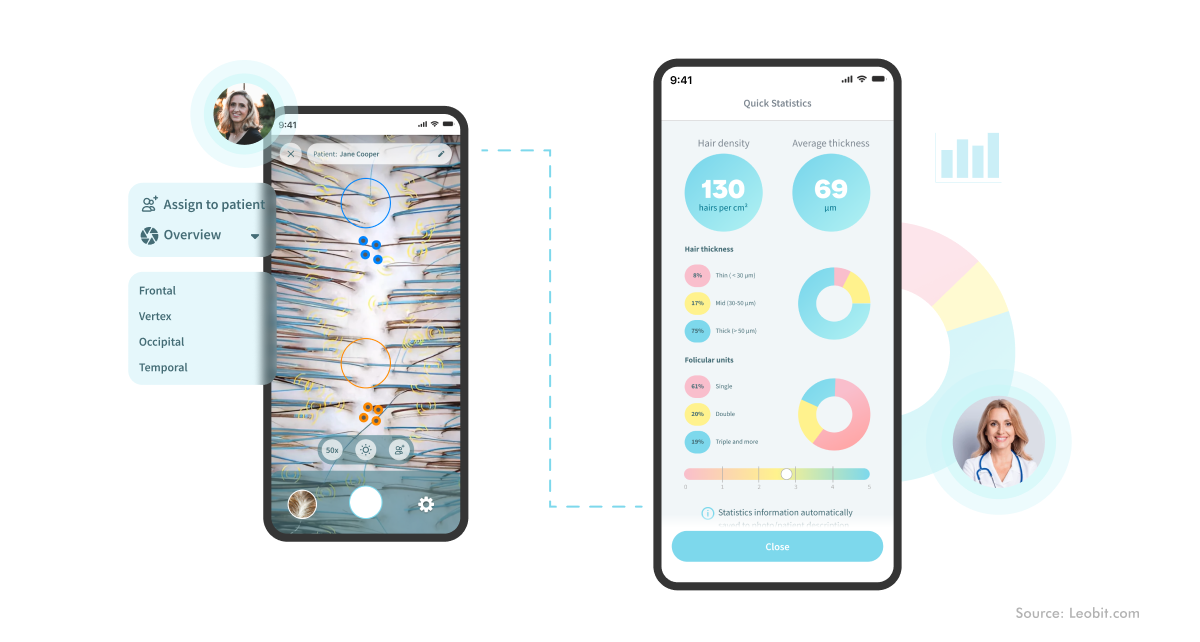
We helped a European healthtech solutions provider build a smart trichoscopy application. The solution can transform a standard smartphone into a digital trichoscope using a camera to evaluate scalp and hair conditions.
Screenshot: AI-powered trichoscopy application
The solution uses a custom API to connect with custom Computer Vision algorithms for analyzing patients’ hair photos. These ML-powered algorithms are based on the company’s proprietary data. Therefore, the app relies on real-life examples to automatically calculate key hair parameters, such as measured area, hair count, density, average length, anagen-telogen ratio, and the number and density of vellus and terminal hairs.
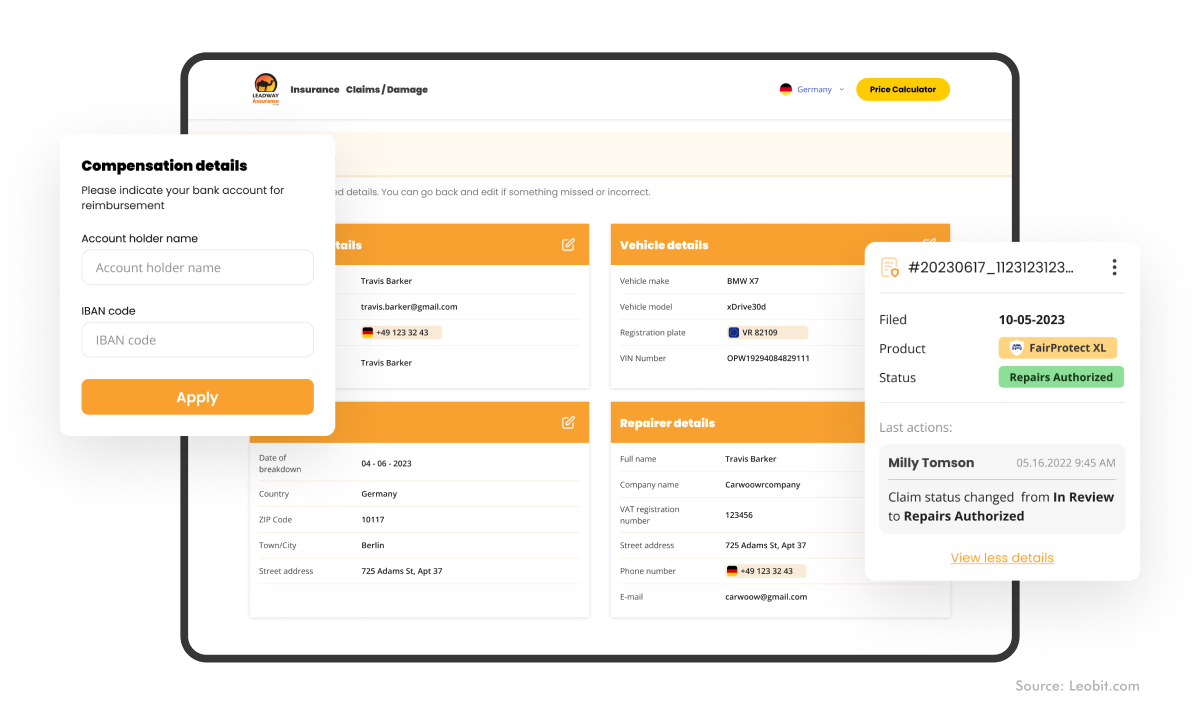
Leobit’s team helped a Germany-based insurtech company develop a feature-packed car warranty solution. The platform provides automation features that support the insurance sales funnel and claim management workflows.
Screenshot: AI-powered platform for car warranty insurance
The solution involves custom AI algorithms powered by Azure AI services. These analytical algorithms facilitate risk and insurance price calculations. Trained on proprietary data, they provide accurate and reliable estimates, saving insurance agents’ time and allowing customers to perform necessary calculations before contacting company representatives.
AI-supported mobile app for a photo printing service
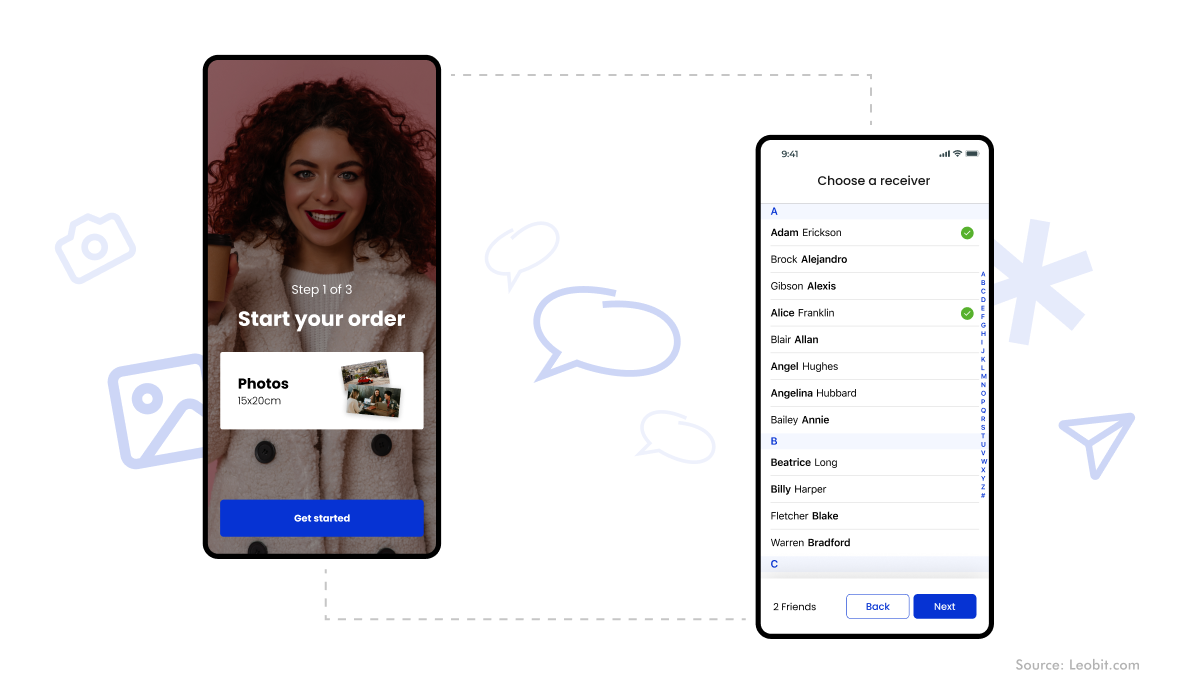
Our customer is a Belgian photo printing service. They have launched a mobile app that enables customers to send images they want to print directly to the company. Their initial product had many bugs and lacked necessary functionality. That’s why the customer contacted Leobit to get a completely redesigned solution tailored to their business needs.
Screenshot: AI-supported mobile app for a photo printing service
Our team relied on its .NET MAUI and Azure expertise to deliver an efficient cross-platform solution that shows excellent performance and provides a convenient user experience.
Our specialists also introduced automation features to enhance several app workflows. For instance, we implemented the Azure Vision AI Service to automatically adjust users’ photos to the required size for printing. A custom Azure Vision AI algorithm analyzes photos based on points of interest and automatically converts them to the necessary format. Users can manually adjust the cropping, which means that the app offers them precision and flexibility in photo editing.
AI adoption and transformation hold an immense potential in terms of automating workflows, improving decision-making, reducing human error, and bringing many other less evident yet important benefits to businesses. The diversity of AI use cases is truly impressive, and much depends on the types of AI systems you choose.
Meanwhile, with the rapid development of technology, some critical challenges remain relevant. To get the real value from developing custom software powered with AI, you need skill and expertise.
Leobit is a company with significant experience in delivering AI-powered solutions across industries. We actively use AI tools in our internal workflows and have built a strong portfolio of AI-driven PoCs. Whether you need to integrate basic AI features into an existing system or build an advanced agentic AI solution from scratch, our team is ready to help.
Contact us to discuss your goals and discover how we can support your artificial intelligence transformation.
FAQ
According to business executives, some of the major benefits of AI adoption include increased innovation, enhanced employee and customer satisfaction, competitive differentiation, and a positive impact on cost-effectiveness.
Generative AI creates content (text, images, code) based on prompts and examples. Meanwhile, agentic AI takes actions toward a goal. Such a system can proactively plan, decide, use tools, and execute tasks and with minimum supervision.
The most significant obstacles to adopting AI include:
Concerns about data accuracy and bias
Lack of proprietary data needed for model training
Poor technology expertise
Lack of financial justification or business case
Data privacy and confidentiality concerns.
Leobit has a strong expertise in developing AI-powered solutions. We have provided customers across industries with numerous apps that include artificial intelligence features. Our teams actively use custom AI agents and tools to facilitate internal workflows.
Additionally, our R&D department continuously works on PoC solutions powered with Azure AI services, such as Azure OpenAI, Azure AI Search, Azure AI Vision, Azure AI Speech, and Azure Machine Learning. Our strong expertise in AI technologies and Microsoft technology stack have earned us a status of Microsoft Solutions Partner for Data and AI.
Roman has a deep passion for a wide array of subjects, spanning from market insights to in-depth technical examinations of complex projects. He dives deep into technical aspects of various solutions to extract valuable insights for business purposes, and he enjoys sharing tips and tricks with business owners to help them leverage advanced technologies effectively.
Vitalii is an experienced solution architect with a strong background in designing scalable, high-performance architectures. He uses modern technologies, including AI, .NET, and cloud-native services to help Leobit customers design and build software solutions tailored to their business needs. In addition to his technical expertise, Vitalii takes part in the company’s R&D efforts, drives internal excellence initiatives, and plays a key role in presales activities.
The growing AI adoption helps businesses automate and enhance many workflows, but it also has a downside. By accelerating software development lifecycles, AI ...
The insurance industry could unlock $50 billion to $70 billion in revenue through AI, according to McKinsey.
However, not every insurtech business that adopts ...
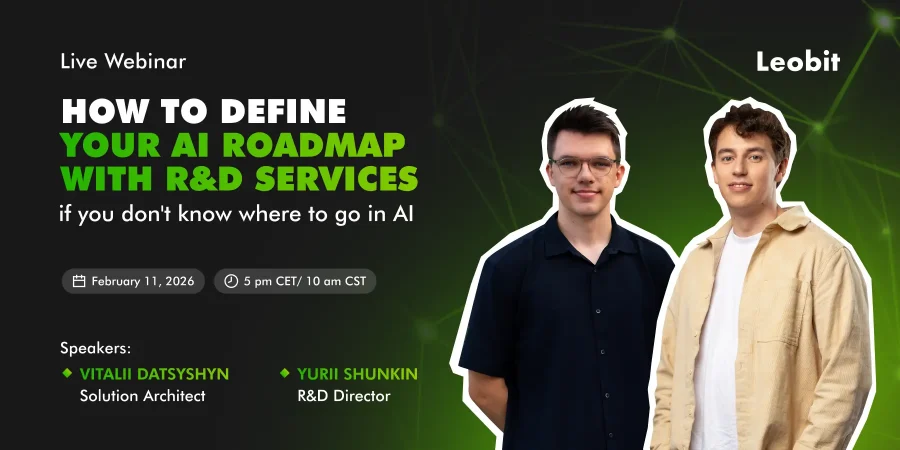
Lviv, Ukraine, February 2026 — Leobit, a full-cycle .NET, AI, and web application development provider, is excited to announce its upcoming webinar ...
Leobit, a .NET, AI, and web application development company, is excited to announce the expansion of its partnership with Microsoft by earning the Microsoft ...
According to McKinsey’s State of AI global survey, nearly nine in ten specialists from companies across industries say their organizations use AI for at ...
The pace of change in software development has never been higher, and 2026 will raise the bar again. We are quickly approaching a world where AI feels as ...
Gartner predicts that by 2028, 33% of enterprise software applications will include agentic AI. The reasons are obvious, since agentic AI can autonomously ...
AI-powered optical character recognition (OCR) once started as a simple neural network barely capable of analyzing text layout. Now it has evolved into an ...
15 mins read
We use cookies to enhance your browsing experience. By agreeing, you accept our Privacy and Cookies Policy.
By ignoring or closing this banner, we will only collect essential cookies necessary for the website to function properly.
 Leobit